
Last updated: August 2026
Figures and program details can change – always verify current details on the official source before acting.
Quick answer
Unclaimed stocks and dividends are transferred to state treasuries after 3 to 5 years of account inactivity. In 2026, you can recover these assets by searching the official NAUPA database at unclaimed.org or by contacting major transfer agents like Computershare. Unlike cash, recovering stocks often requires proof of ownership of the original shares, and many states now have specific rules to prevent the immediate liquidation of your portfolio.
Key takeaways
- Over $100 billion in unclaimed property is held by states, with a massive portion tied up in forgotten securities and dividends.
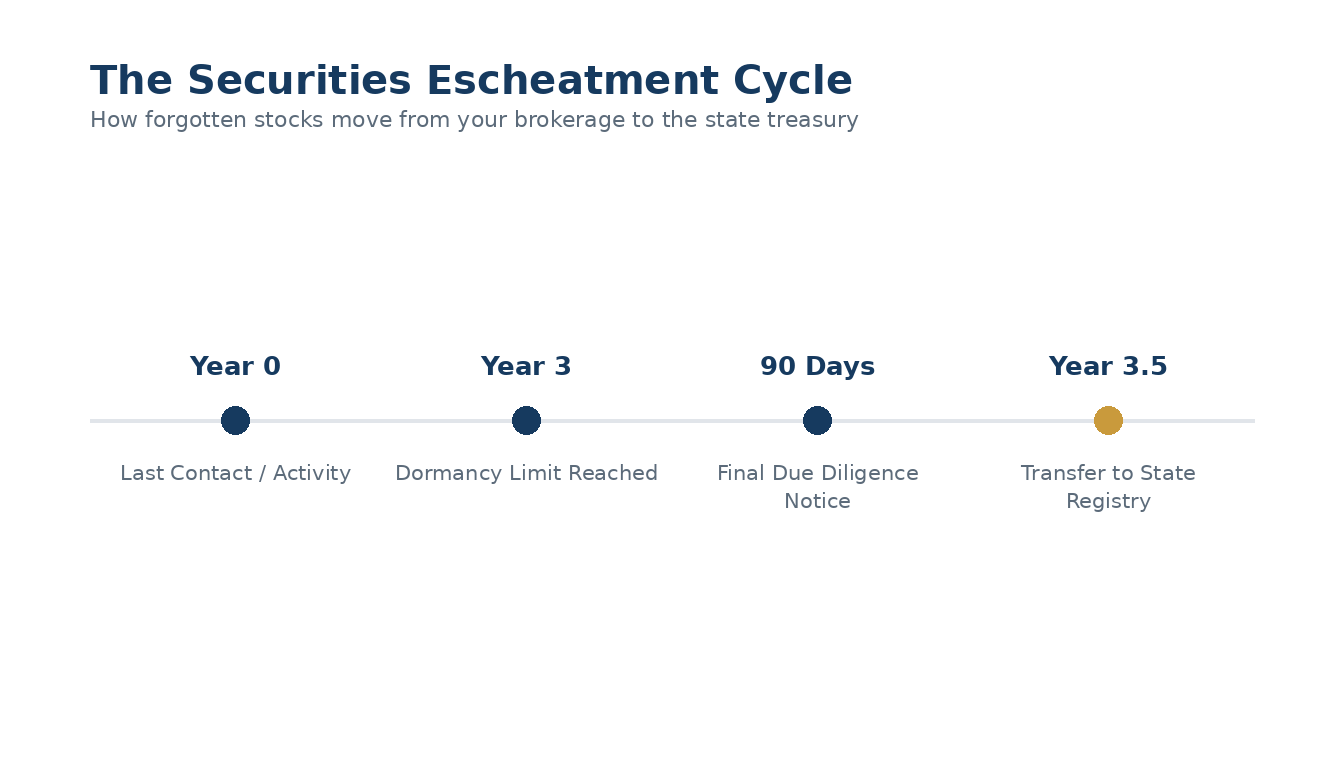
- The ‘dormancy period’ for stocks is typically 3 years; if you don’t log in or cash a dividend check, your shares are escheated to the state.
- New 2026 consumer protections in many states aim to stop treasuries from selling your stocks at a loss immediately upon receipt.
- Searching for the ‘Transfer Agent’ (the company that manages the shares) is often the fastest way to find stocks before they reach the state level.
The Multi-Billion Dollar Gap in the Modern Portfolio
As we navigate the financial landscape of August 2026, a staggering reality has emerged: billions of dollars in blue-chip stocks, mutual funds, and uncashed dividends are sitting in state-run vaults. Unlike a forgotten utility deposit or a stray $50 paycheck, unclaimed securities represent growing assets. A single share of a tech giant forgotten in 2010 could be worth a fortune today, yet many owners are unaware that their ‘buy and hold’ strategy accidentally triggered a state seizure.
The problem stems from a process known as ‘escheatment.’ When a brokerage or a transfer agent loses contact with a shareholder, they are legally required to hand those assets over to the state. In 2026, this process has become more aggressive as digital-only communication leads to more ‘returned mail’ triggers. If a statement bounces back from your old email address or a physical check remains uncashed for three consecutive years, your brokerage may be forced to report those shares as abandoned.
Recovering these assets is fundamentally different from claiming cash. Because stocks fluctuate in value, the timing of your claim and the state’s handling of the assets can mean the difference between recovering your original portfolio and receiving a check for its value five years ago. Understanding the 2026 securities recovery landscape is essential for anyone who has ever moved homes, changed email addresses, or inherited a family estate.

Why Stocks Go ‘Missing’ in a Digital Age
One of the biggest misconceptions in 2026 is that ‘checking your app’ is enough to keep an account active. While modern brokerages make it easy to see your balance, the legal definition of ‘contact’ often requires more specific actions. If you hold shares directly through a company—perhaps through a Dividend Reinvestment Plan (DRIP) or an employee stock purchase program—the company must verify you are still ‘at that address’ at least once every three years.
Common triggers for escheatment in 2026 include corporate mergers. When Company A buys Company B, your shares are often converted into new stock or cash. If the mailing for that conversion goes to an old address, those new assets go straight to the unclaimed property office. We see this frequently with massive legacy companies like AT&T, Disney, or Verizon, where decades of corporate restructuring have left millions of ‘fractional shares’ in the hands of state treasurers.
Another major factor is ‘demutualization.’ Historically, many large insurance companies (like MetLife or Prudential) were owned by their policyholders. When they converted to publicly traded companies, they issued stock to their customers. Many people never realized they were now stockholders. In August 2026, thousands of these original shares—now worth significant sums—remain in state databases because the owners simply didn’t know they existed.
The ‘Liquidation’ Controversy: Knowing Your Rights
The most critical update for 2026 involves how states handle your stocks once they receive them. In the past, many states would liquidate (sell) securities almost immediately upon receipt. If the state sold your stock during a market dip, you would only be entitled to the cash value at the time of sale—even if the stock price doubled a year later.
However, recent legal challenges have forced many states to change their tune. According to the Securities and Exchange Commission (SEC), brokerages must perform ‘due diligence’ searches for lost shareholders before turning over assets. Many state treasuries, including those in California and New York, have now implemented ‘holding periods’ where they are prohibited from selling your shares for a set number of months or years, giving you a window to reclaim the actual stock.
As noted on the official SEC Investor Bulletin on Escheatment, ‘If the state has already sold the securities, the owner is typically only entitled to the proceeds of the sale, which may be less than the current market value.’ This is why searching early is so vital; you want to intercept the assets before the state’s ‘sell trigger’ is pulled.
Myth vs. Reality: Recovering Your Shares
There are several dangerous myths circulating about unclaimed stocks that prevent people from filing claims. Let’s look at the reality of the 2026 recovery process.
Myth: If I find my name in a state database, the money is lost if I don’t have the original paper certificates.
Reality: In 2026, most stock ownership is ‘book-entry,’ meaning it’s recorded digitally. You do not need a physical piece of paper to file a claim. You will, however, need to provide proof of your identity and your former address that matches the one on the brokerage’s records.
Myth: The state will notify me automatically if they have my stocks.
Reality: While some states are testing ‘Money Match’ programs (like those we’ve discussed in our Pennsylvania guide), these programs usually only work for small cash amounts. For high-value securities, the burden of discovery is almost always on you.
Myth: If the company I owned went bankrupt, the shares are worthless.
Reality: Even if a company’s stock is no longer traded, it may have been involved in a liquidation settlement or a buyout. There could be cash dividends or litigation payouts waiting for you, even if the stock itself is ‘gone.’

The Transfer Agent: The ‘Secret’ Registry You Must Check
Before stocks ever reach a state treasury, they are held by companies called Transfer Agents. These are the record-keepers for corporations. If you suspect you have forgotten shares from a specific company (like Apple, Microsoft, or Exxon), your first stop should not be the state—it should be the transfer agent.
The ‘Big Three’ transfer agents handle the vast majority of U.S. stocks: Computershare, Equiniti (formerly AST), and Broadridge. Each of these companies maintains its own internal ‘lost shareholder’ database. In August 2026, contacting these agents directly can often help you recover assets that are in the ‘pre-escheatment’ phase, meaning they haven’t been handed over to the state yet. This is the ideal scenario because it avoids the state’s complex claiming process and potential liquidation risk.
To find which transfer agent a company uses, visit the company’s official ‘Investor Relations’ website. For example, if you own shares in a major utility company, their investor page will list exactly which agent manages their stock registry. A quick phone call or an online account recovery search can save you months of bureaucratic delays.
Step-by-Step: How to Claim Your Securities in 2026
If your stocks have already been turned over to the state, follow this specific audit process to ensure you recover the maximum value possible.
- Multi-State Search: Use unclaimed.org to search every state where you have lived, worked, or even where the company was headquartered. Many Delaware-incorporated companies turn assets over to the Delaware Office of Unclaimed Property regardless of where you live.
- Analyze the Listing: When you find a match, look for labels like ‘Shares of Common Stock’ or ‘Uncashed Dividends.’ If it says ‘Custodial Account,’ it may be an old account set up by your parents (UGMA/UTMA) that you’ve forgotten about.
- Gather Specific Documentation: For securities, states usually require more than just an ID. You may need a 1099-DIV form from a previous year, an old account statement, or a ‘Letter of Authorization’ if you are claiming on behalf of a deceased relative.
- Verify the Liquidation Status: Before finalizing the claim, ask the state treasurer’s office if the shares are still held ‘in-kind’ (as stock) or if they have been liquidated. If they have been sold, verify the date and price of the sale.
- Track the Dividend Trail: Often, a search will reveal uncashed dividends but not the underlying stock. If you find dividends, it is a massive red flag that the stock itself might be missing. Use the dividend record to track down the brokerage or transfer agent where the shares are held.
| Property Type | Typical Dormancy Period | Recovery Complexity | Key Requirement |
|---|---|---|---|
| Uncashed Dividends | 3 Years | Low | Proof of Address |
| Common Stock (Book Entry) | 3 – 5 Years | Medium | Proof of SSN/ID |
| Mutual Fund Accounts | 3 Years | High | Original Account Number | Varies (Merger-based) | Medium | Merger Documentation |
Common Mistakes in Securities Recovery
Many claimants fail to recover their full share because they overlook the technical details of stock ownership. One of the most frequent mistakes is searching only for the owner’s current legal name. Because stocks are often held for decades, they may be registered under a maiden name, a misspelled name, or even a ‘Care Of’ address at a former employer’s office.
Another pitfall is ignoring ‘In-Kind’ transfers. When you file a claim, you often have the choice to receive a check for the value or have the shares transferred to your current brokerage account. Whenever possible, choose the ‘In-Kind’ transfer. This allows you to maintain your ‘cost basis’ and avoid immediate tax consequences that come from the state cutting you a check for a forced sale.
As the National Association of Unclaimed Property Administrators (NAUPA) notes, ‘The goal is to return the property to the rightful owner in the most efficient manner possible, but the owner must provide clear evidence of their right to the asset.’ In 2026, this means having your ‘paper trail’ ready before you click the claim button.

The 2026 Scam Alert: ‘Asset Recovery’ Red Flags
Because unclaimed stocks often involve large sums, they are a primary target for ‘tracer’ or ‘finder’ scams. These companies may contact you claiming they have found a ‘six-figure portfolio’ in your name and offer to recover it for a 30% fee. In August 2026, there is almost no reason to use these services.
Official state searches are always free. If someone asks for an upfront fee or your full Social Security number over the phone to ‘unlock’ your stocks, hang up. Legitimate state agencies will never cold-call you and demand payment to process a claim. If you are contacted by a ‘professional finder,’ remember that many states legally cap the fees these people can charge (often at 10%), but you can always do the search yourself for $0 at MissingMoney.com.
Unclaimed Securities FAQ
How do I know if my stocks were sold by the state?
When you view your property details in a state database, look for a ‘Property Status’ or ‘Asset Type.’ If it lists a specific dollar amount followed by the term ‘Liquidated’ or ‘Sold,’ the state has already converted the shares to cash. You can contact the state’s unclaimed property division to request the date of the sale and the price per share.
Can I claim stocks belonging to a deceased relative?
Yes, but you will need to provide a death certificate and proof that you are the legal heir or executor of the estate. This often requires ‘Letters Testamentary’ from a probate court. Stocks are one of the most common assets found during ‘Estate Audits’ by family members.
What happens to the dividends that were earned while the state held my stock?
In most jurisdictions, if the state holds your stock ‘in-kind,’ any dividends issued during that time are also collected by the state and held for you. However, the state does not pay you interest on those dividends. You are entitled to the dividends that were actually paid out by the company, but not any potential market gains on that cash.
Do I have to pay taxes on recovered unclaimed stocks?
Recovering the shares themselves is generally not a taxable event. However, if the state liquidated the shares and sends you a check, that sale may be considered a capital gain or loss for tax purposes. Additionally, any recovered dividends are considered taxable income in the year you receive them. Consult a tax professional for your specific 2026 filing.