

Last updated: August 2026
Figures and program details can change – always verify current details on the official source before acting.
Quick answer
If your bank or credit union failed within the last 10 years, the federal government may be holding your unclaimed deposits. Unlike state-level unclaimed property, these funds are held by the FDIC and NCUA in separate federal registries. You can search these official databases for free using your name or business entity, but you must act before the strict 10-year “sunset” deadline expires and the money is permanently transferred to the U.S. Treasury.
Key takeaways
- Federal bank failure funds are NOT listed in state unclaimed property databases like MissingMoney.com.
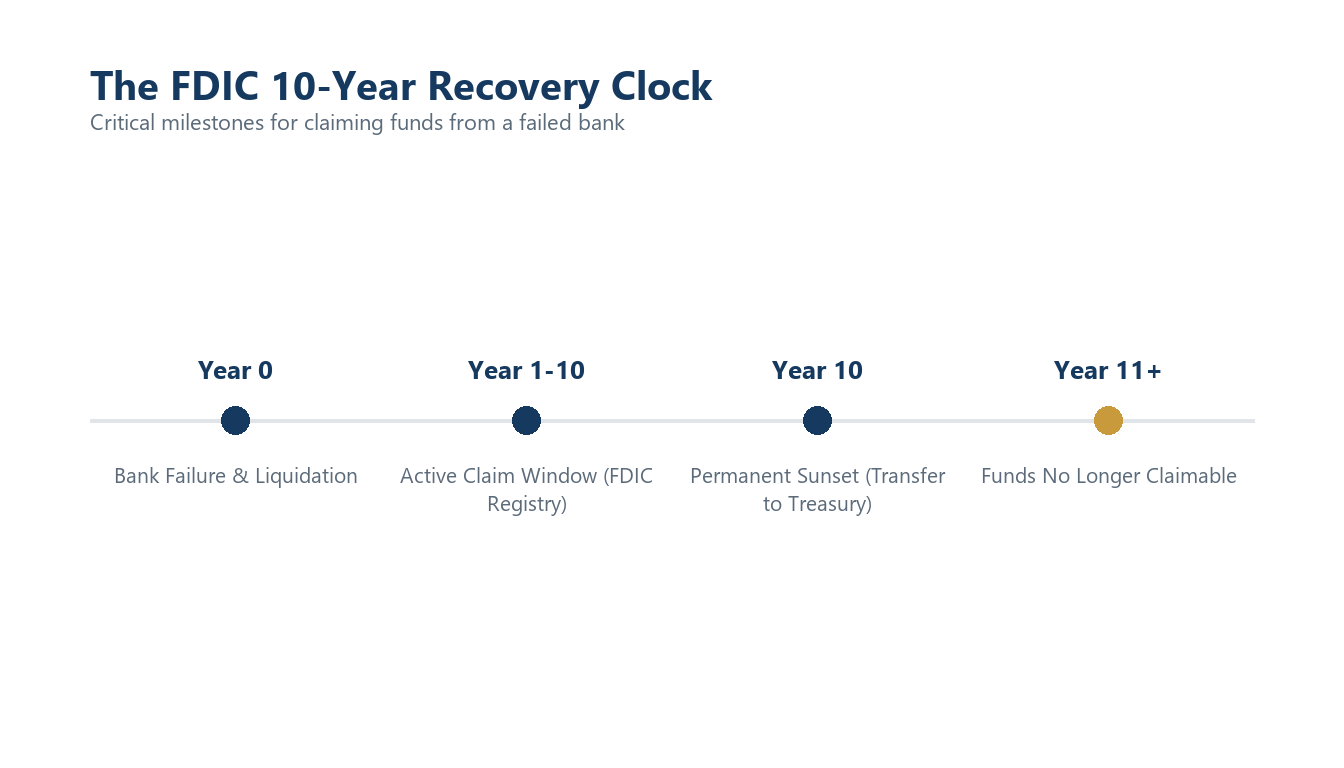
- The FDIC holds unclaimed funds for exactly 10 years from the date of a bank’s closure.
- Credit union members must use the separate NCUA registry to find lost shares and deposits.
- Claiming these funds is entirely free; any service asking for an upfront fee is a scam.
The Hidden Billions: Why State Searches Often Miss Your Bank Accounts
When most Americans look for “lost money,” they head straight to their state treasurer’s website. While those databases are excellent for finding uncashed paychecks and utility deposits, they frequently lack one massive category: funds from failed financial institutions. Because the FDIC and NCUA are federal entities, the money they recover from closed banks does not always flow into state coffers immediately.
As of August 2026, millions of dollars remain in federal limbo from bank liquidations that occurred over the last decade. If you had a certificate of deposit (CD), a savings account, or even a safe deposit box at an institution that was shuttered by regulators, your name might be on a federal list that most “missing money” tools never touch. Understanding the difference between a state-held asset and a federally-held deposit is the first step to a successful recovery.
One primary reason for this “federal silo” is the legal structure of bank receiverships. When a state-chartered bank fails, it is often liquidated under federal oversight. This creates a jurisdictional barrier where the funds stay with the FDIC for a decade before they are even considered for transfer to a state, or, more commonly, before they are permanently claimed by the Treasury. As covered in our guide on unclaimed pensions and federal registries, the government maintains several “siloed” databases. The FDIC registry is one of the most significant, yet least checked, resources available to the public.
Myth 1: “If my bank closed years ago, the money is gone forever”
The Reality: When a bank fails, the FDIC steps in as a receiver. In most cases, a healthy bank buys the failed one, and your accounts are transferred automatically. This is known as a “Purchase and Assumption” agreement. However, in “straight liquidations” where no buyer is found, or when a check sent to a customer goes uncashed or is returned as undeliverable, the FDIC holds that money in trust. You have a legal right to claim these funds for a specific window of time, even if the bank building itself has been a coffee shop for years.
The Federal Deposit Insurance Act ensures that your insured deposits (up to $250,000 per depositor) are protected. If the FDIC cannot find you to deliver those funds at the time of the closure, they enter the money into their Unclaimed Funds database. This database includes more than just simple checking account balances; it can include cashier’s checks, money orders issued by the bank, and dividends from the sale of bank assets that were meant for creditors and large depositors. You can search this official portal by your name or the name of a deceased relative to see if a balance is waiting for you.

Myth 2: “The 10-Year Sunset Rule is just a suggestion”
The Reality: This is the most dangerous misconception in the world of unclaimed money. Unlike state-held property, which states often hold in perpetuity for the owner (meaning you can claim it 30 years later), FDIC-held funds have a hard expiration date. Under federal law, specifically 12 U.S.C. § 1822(e), the FDIC generally holds unclaimed insured deposits for exactly 10 years after the bank is liquidated.
Once that 10-year clock runs out, the money is legally “sunsetted.” This means the funds are transferred to the U.S. Treasury, and the owner’s right to claim them is permanently extinguished. There is no appeal process and no way to retrieve the funds once they have been moved to the Treasury’s general fund. In August 2026, several major liquidations from the mid-2010s are reaching their final expiration. For example, if a bank was officially closed on August 15, 2016, and the receivership was finalized shortly thereafter, this month represents your absolute last chance to file a claim before the money becomes property of the federal government forever.
Myth 3: “Credit union members are out of luck compared to bank customers”
The Reality: While the FDIC handles banks, the National Credit Union Administration (NCUA) performs the exact same role for credit unions. If a credit union is liquidated, the NCUA maintains its own separate Unclaimed Deposits database. Many people search the FDIC site, find nothing, and assume their money is gone, forgetting that their local credit union belongs to a different federal system. This is a critical distinction because credit unions are often smaller and more localized, meaning their closures receive less national news coverage than a bank failure.
The NCUA process is very similar to the FDIC’s. You can search their registry for “Unclaimed Shares,” which represent the ownership interest and deposits you had in the credit union. In a credit union, your “savings account” is technically a share account, and these funds are insured by the National Credit Union Share Insurance Fund (NCUSIF). Just like banks, these funds are subject to specific timelines, and searching both the FDIC Unclaimed Funds portal and the NCUA database is essential for a thorough audit. If you were a member of a teacher’s credit union, a military credit union, or a local community union that no longer exists, this is where your money is likely waiting.
Myth 4: “I have to pay a ‘Finder’ or ‘Asset Recoverist’ to get this money”
The Reality: You should never pay a percentage or an upfront fee to recover money from the FDIC or NCUA. Because these databases are public, some third-party companies scan them and send official-looking letters to potential owners, offering to “assist” in the claim for a 10% to 30% fee. These companies often use names like “Federal Recovery Taskforce” or “National Asset Locators” to sound like government agencies. In reality, these companies are simply doing a free search on your behalf and charging you for it.
Official federal claims are always free to file. If you receive a solicitation asking for your Social Security number or a payment over the phone, it is likely a scam. As we discuss in our guide on spotting grant and money scams, the government will never ask you for money to release your own funds. Always go directly to the .gov websites to initiate your search. Be especially wary of anyone who claims they can “expedite” the process for a fee; the FDIC processes claims in the order they are received, and no third party has a “fast track” to federal funds.

How to Search: A Step-by-Step Federal Audit
Performing a federal deposit search is different from a state search. You aren’t just looking for your name; you are looking for a specific historical event—the failure of your financial institution. Follow these steps to ensure you haven’t left money on the table:
1. **Identify Potential Failures:** Visit the FDIC Bank Failure Directory to see if a bank you used has been closed since 2010. Search by state or zip code. Note the “Closing Date” and the “Successor Institution.” If no successor is listed, or if the successor bank also failed later, your money is almost certainly in the unclaimed fund.
2. **Search the Unclaimed Portal:** Enter your full name or the name of your business into the FDIC Unclaimed Funds search tool. Use variations (e.g., “Robert Smith” and “Bob Smith”) to catch any clerical errors made during the bank’s original data entry. Don’t forget to check maiden names or the names of trusts you may have established.
3. **Check for Dividends:** This is a step most people skip. If you had more than $250,000 in the bank, you may be owed “dividends” on the uninsured portion of your balance. These are paid out as the FDIC sells the bank’s assets over time. These checks are frequently mailed to old addresses and remain uncashed. Even if you received your $250,000 insurance payout, you might still be on the list for these secondary payments.
4. **Cross-Reference with the NCUA:** If you were a member of a credit union, repeat this process on the NCUA’s Unclaimed Deposits page. Credit unions often serve specific professions or regions, so searching the name of a deceased relative who worked in a unionized field (like aerospace, nursing, or the postal service) is a common way to find forgotten family assets.
Comparison: FDIC Insurance vs. Unclaimed Recovery
It is important to understand what you are actually searching for. This table breaks down the two most common types of federal recovery available to you.
| Feature | Standard FDIC Insurance | Unclaimed Deposit Recovery |
|---|---|---|
| Status | Active/Immediate | Post-Liquidation |
| Who Initiates? | The FDIC (Automatic) | The Owner (Search-based) |
| Dollar Limit | $250,000 per category | Varies (Original balance) |
| Time Limit | N/A (While bank is open) | 10 Years (After closure) |
| Cost | Free | Free |
Essential Documents for a Successful Claim
Once you find a match in the federal database, you cannot simply click a button to get your money. Because these funds involve bank accounts, the security requirements are much higher than they are for a $20 utility refund. You will generally need to provide the following to the FDIC or NCUA:
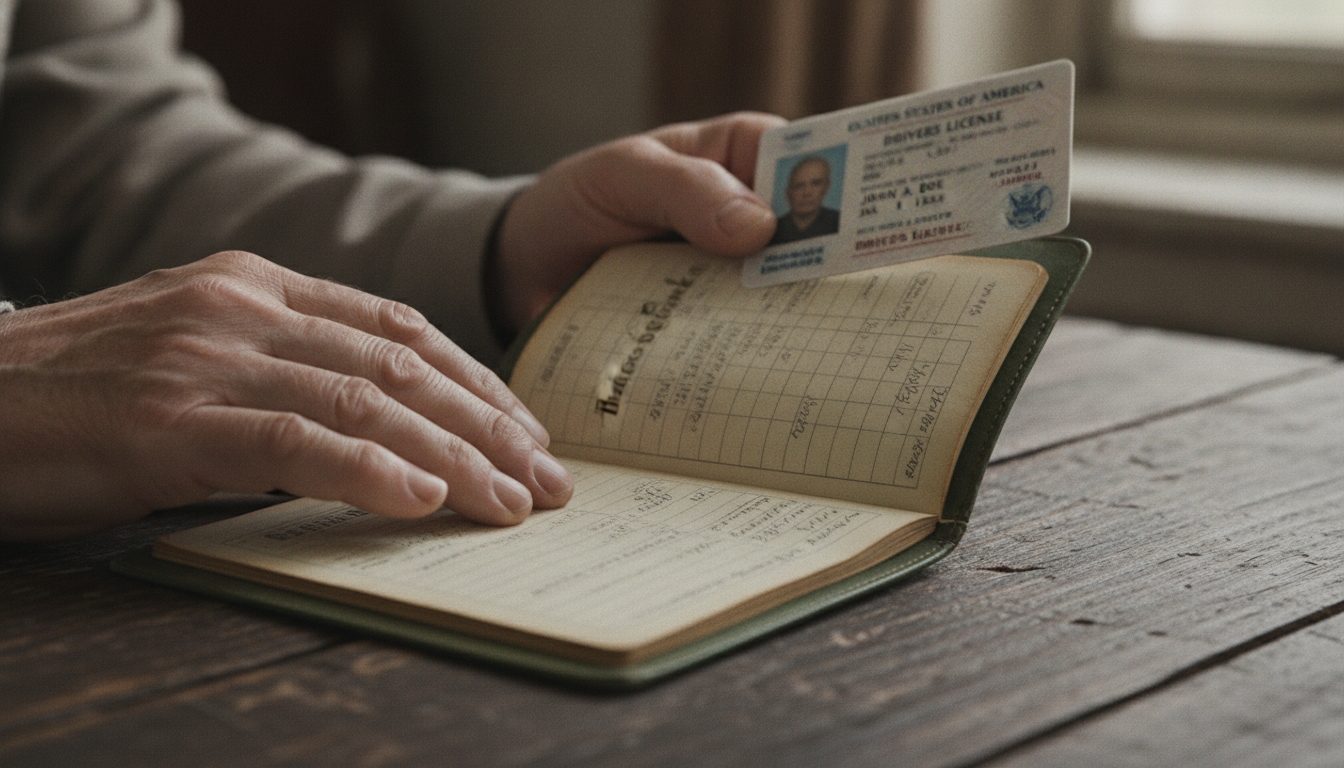
Proof of your identity is the foundation of any claim. A valid, government-issued photo ID, such as a driver’s license or passport, is mandatory. If your current name differs from the name on the account (due to marriage or divorce), you must provide the legal bridge, such as a marriage certificate or a court order for a name change. If you are claiming funds for a deceased relative, the requirements become stricter. You will need a certified copy of the death certificate and proof that you are the legal heir or executor of the estate. This usually requires “Letters of Administration” or “Letters Testamentary” issued by a probate court.
Furthermore, the FDIC may ask for “Proof of Ownership.” This is where those old files in the attic become valuable. An old bank statement, a passbook, or even a cancelled check from the closed institution can significantly speed up the process. If you don’t have these, you may need to provide proof of your address at the time the bank was active, such as an old tax return or utility bill. If you are claiming on behalf of a business, you will need to provide the business’s Articles of Incorporation and proof that you are an authorized officer of the company.
Searching for Deceased Relatives: The “Successor in Interest” Path
One of the largest pools of unclaimed federal money belongs to individuals who have passed away. When an account holder dies and their bank subsequently fails, the FDIC often has no way of knowing who the rightful heirs are. If you suspect a parent or grandparent had an account at a bank that failed, you must act as a “Successor in Interest.”
The search process is the same, but the documentation is more robust. In addition to the death certificate, the FDIC requires an “Affidavit of Heirship” or specific probate documents. If the estate was small and did not go through formal probate, many states have a “Small Estate Affidavit” that the FDIC will accept. This allows heirs to claim funds without the expense of a full court proceeding. However, be aware that if there are multiple heirs, the FDIC will typically issue a check made out to all heirs jointly, or require each heir to file their own separate claim form to ensure the funds are distributed according to state law.
What Happens to Safe Deposit Boxes?
When a bank fails, the FDIC doesn’t just hold the cash in your checking account; they also take custody of unclaimed safe deposit boxes. If you had a box and didn’t retrieve its contents when the bank closed, those items are typically held for a period of time before being auctioned. The process of inventorying these boxes is rigorous, with multiple witnesses present to ensure every item is logged.
If you are searching for physical items (like jewelry or family heirlooms), you must act even faster than you would for cash. The FDIC typically only holds the physical contents for 12 to 18 months before moving them to a public auction. After that, you can only claim the cash value of what was inside at the time of the sale. This is a critical distinction that many people miss until it is too late to recover the original items. Furthermore, personal documents like birth certificates, military discharge papers, and family photos are usually not auctioned; they are held for a longer period and eventually destroyed if no owner comes forward. If you think you had important papers in a failed bank’s vault, contact the FDIC’s “DRR” (Division of Resolutions and Receiverships) immediately.
Frequently Asked Questions
Does the FDIC search cost money?
No. Searching the FDIC and NCUA databases and filing a claim is completely free. You should ignore any website that asks for a credit card number, a “recovery fee,” or a percentage of the total amount to access these federal records. Always ensure the URL ends in .gov before entering any personal information. If you encounter a site that charges a fee, you can report it to the Federal Trade Commission (FTC) as a fraudulent service.
How long does it take to get a check from the FDIC?
Once your claim is approved and your identity is verified, most claimants receive their funds within 30 to 90 days. Complex claims involving deceased owners, dissolved corporations, or large business accounts may take longer if additional documentation is required. If the FDIC requires more information, they will send a formal letter via U.S. Mail; they generally do not initiate first contact regarding a claim via email or text message.
What if my bank was bought by another bank?
If your bank was acquired through a “Purchase and Assumption” agreement (e.g., Wachovia being bought by Wells Fargo), your money was transferred to the new institution. It is not “unclaimed” in the federal sense; it is simply sitting in an account at the successor bank. In these cases, the FDIC database will show the name of the bank that took over the deposits. You should contact that successor bank’s “Escheatment Department” or “Unclaimed Property Division” directly to regain access to those funds.
Can I claim money for a bank that failed in the 1980s?
Likely not. The 10-year sunset rule is strictly enforced by federal law. Funds from the massive wave of bank failures during the Savings and Loan crisis of the 1980s and early 1990s have long since been transferred to the U.S. Treasury and are no longer available for claim by the original owners. The only exception would be if the funds were transferred to a state’s unclaimed property division before the federal sunset took effect, but this was a rare occurrence during that era.