
Last updated: August 2026
Figures and program details can change – always verify current details on the official source before acting.
Quick answer
North Carolina is currently holding over $1.3 billion in unclaimed property. Through the official NCCash.com portal, residents can search for forgotten funds for free. Most notably, the 2026 ‘NCCash Match’ program automatically mails checks to many residents without requiring a formal claim form if their current address matches state records and the amount is under $250.
Key takeaways
- North Carolina holds $1.3 billion in lost assets, including uncashed checks and forgotten bank accounts.
- The ‘NCCash Match’ system automatically processes claims for certain individuals, bypassing the usual paperwork.
- Official searches are always free via the Department of State Treasurer’s NCCash.com portal.
- Unclaimed funds in NC eventually support the State Education Assistance Authority for student scholarships.
The 2026 NCCash Match Expansion: Getting Paid Without Asking
As of August 2026, North Carolina has solidified its position as a leader in proactive asset return. The state’s signature “NCCash Match” program has reached a new milestone this month, successfully automating the return of over $50 million in small-dollar assets since the start of the year. This system is designed to eliminate the friction that often prevents people from claiming their own money.
Unlike traditional systems where you must initiate a search, the NCCash Match program cross-references the Unclaimed Property Division’s database with current records from the Department of Revenue. If a match is found—and the amount is $250 or less for an individual—the state simply mails a check to your current address. This “hands-off” approach is why many North Carolinians have recently reported receiving “surprise” checks from the State Treasurer.
However, the automated system does not catch everything. It primarily targets simple cash claims linked to a single owner. If you have changed your name, moved out of state, or are owed an amount exceeding the $250 threshold, you must still navigate the manual search and claim process. Understanding this distinction is the first step to ensuring you don’t leave your share of the $1.3 billion pool sitting in Raleigh.
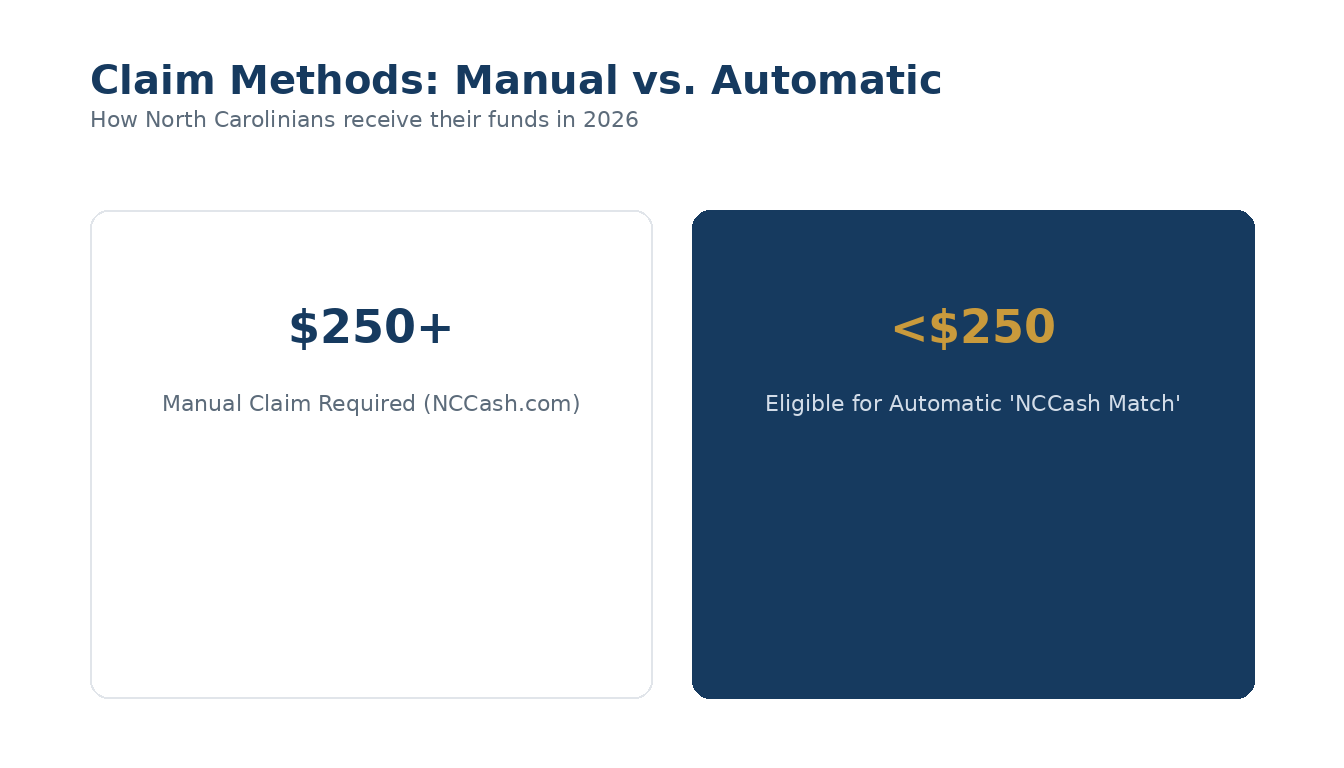
The success of this automation has changed how residents interact with the state’s treasury. While the “surprise check” is a welcome modern convenience, the bulk of the $1.3 billion fund remains in accounts that require a manual trigger. These accounts often include complex assets like liquidated stocks, insurance death benefits, and safety deposit box contents that the automated system cannot safely verify without human intervention.

The $1.3 Billion Audit: Where Does North Carolina’s Money Come From?
Many residents assume unclaimed property is just “leftover change,” but the reality in North Carolina is much more substantial. The fund grows daily as businesses are legally required to turn over dormant accounts. Under the North Carolina Unclaimed Property Act, businesses must perform “due diligence” by attempting to contact you at your last known address before the state takes custody of the funds.
Common sources of these funds include forgotten utility deposits from Duke Energy or Dominion, uncashed dividend checks from local banking institutions, and abandoned savings accounts. Because North Carolina is a hub for the banking and technology sectors, the state often sees a high volume of unvested or forgotten equity and payroll assets from defunct startups or corporate mergers.
A unique feature of the North Carolina fund is its secondary purpose. While the money always belongs to the original owner (or their heirs) and can be claimed at any time, the interest earned on the $1.3 billion is not kept by the state for general spending. Instead, it is used to fund the North Carolina State Education Assistance Authority, providing scholarships and grants to North Carolina students attending state universities and community colleges.
How to Manually Search NCCash.com in 2026
If you didn’t receive an automatic NCCash Match check, your next step is the official state portal: NCCash.com. This is the only official database for the state of North Carolina. It is important to use this specific URL, as many third-party “finder” sites use similar-sounding names to charge fees for services the state provides for free.
When searching, start with just your last name and first initial to capture the widest range of results. Middle initials and suffixes like “Jr.” or “III” are often entered inconsistently by banks, so keeping your search broad is more effective. If you have a common surname like Smith or Vance, you can narrow the results by entering your city or zip code, but remember that the address on file is where you lived *at the time the money was lost*—not necessarily where you live now.
For those who have lived in multiple states, it is worth checking the national database as well. As noted in our Unclaimed Property by State comparison resource, each state maintains its own separate registry. If you worked in Charlotte but lived across the border in Fort Mill, you may have funds waiting in both the North Carolina and South Carolina databases.
The NCCash system also allows you to search for businesses. If you have ever owned a small business or a non-profit in North Carolina, search the business name exactly as it was registered. Vendors often fail to deliver final payments or return deposits to businesses that have changed locations or legally dissolved, leaving those funds sitting in the state’s escheat fund for years.
Decoding North Carolina’s Dormancy Periods
Money doesn’t move to the state’s vault the moment you forget about it. There is a legal waiting period, known as the “dormancy period,” during which the holding institution must keep the funds and try to reach you. In North Carolina, these periods vary significantly depending on the type of asset. Understanding these timelines helps you know when to start looking for a missing payment.
For most bank accounts and uncashed checks, the dormancy period is three years. However, for payroll wages, the timeline is much tighter. If a North Carolina employer cannot deliver your final paycheck, they are generally required to turn it over to the state after just one year. This makes payroll one of the fastest-moving categories of unclaimed property in the state.
| Property Type | NC Dormancy Period | Action Threshold |
|---|---|---|
| Unclaimed Wages & Payroll | 1 Year | High Priority |
| Utility Deposits | 1 Year | Fast Turnover |
| Savings & Checking Accounts | 3 Years | Standard |
| Life Insurance Policies | 3 Years | Standard |
| Stock Dividends/Equity | 3 Years | Complex Claims |
This variety in timelines means that a single search might not reveal everything. If you moved six months ago, your old utility deposit won’t show up in the NCCash database for at least another year. This is why financial experts recommend performing a “state audit” of your name every twelve months, ideally during tax season when you are already gathering your financial documents.
The Verification Barrier: Documentation You Will Need
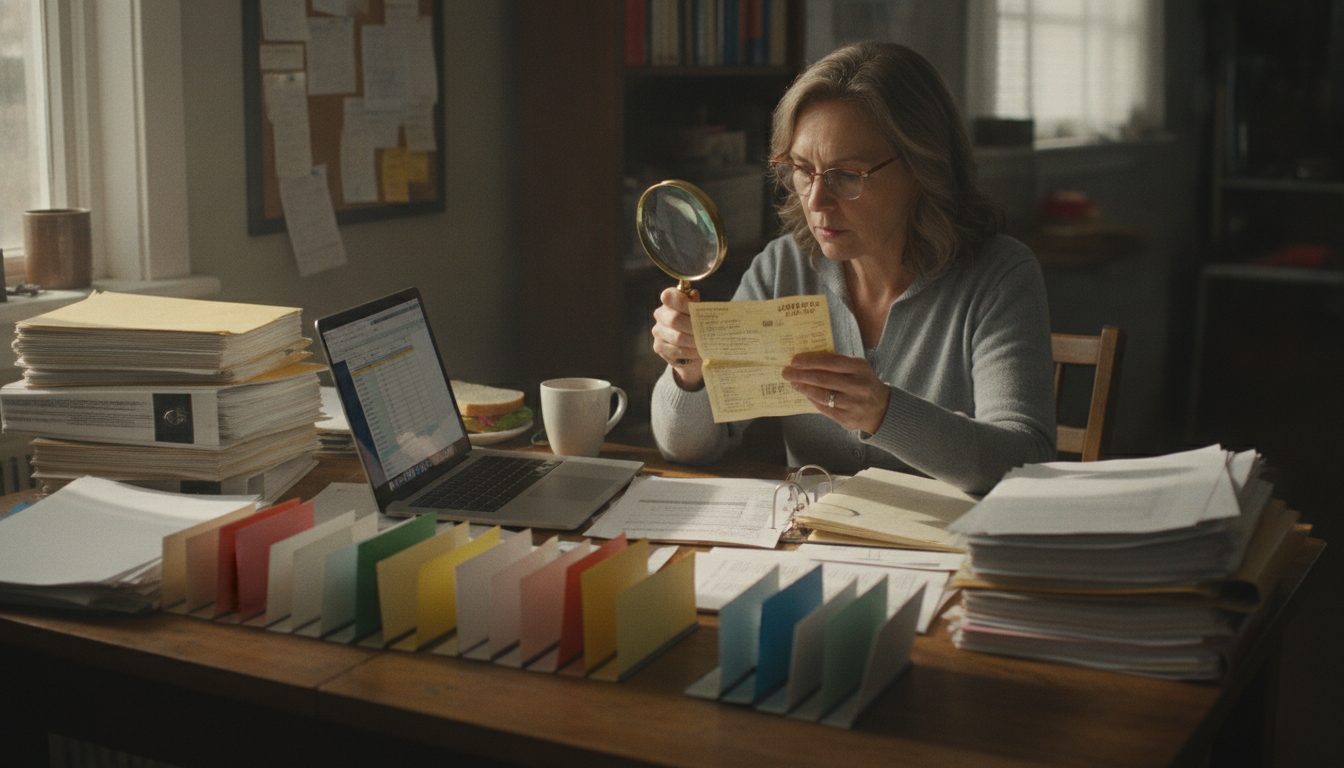
Finding your name on the list is only half the battle. To actually receive the funds, you must prove you are the rightful owner. For simple claims, the NCCash.com portal allows for “e-claims,” where you can upload digital copies of your documentation. This is the fastest way to get paid, often reducing the wait time from months to just a few weeks.
The state typically requires three core pieces of evidence. First, a copy of your valid photo ID (driver’s license or passport). Second, proof of your Social Security number or Taxpayer ID. Third, and most importantly, proof of your connection to the “address of record” listed in the claim. This is often where claimants get stuck, especially if the money is from an apartment they lived in twenty years ago.
If you no longer have a utility bill or lease from an old address, don’t panic. You can often use a copy of an old tax return, a school transcript, or even a credit report that shows your address history. The goal of the Unclaimed Property Division is to return the money, not to find reasons to keep it, so they are generally flexible with the types of secondary evidence they will accept.
If the claim is particularly large or involves securities, the state may require a notarized claim form. This is a security measure to prevent identity theft. You can find a notary at most local banks or UPS stores in North Carolina. Once the notarized form and supporting documents are submitted, the state performs a final review before issuing a paper check or a direct deposit.
How to Spot North Carolina Unclaimed Property Scams
The popularity of programs like NCCash Match has unfortunately created an opportunity for scammers. In 2026, we have seen an increase in sophisticated “phishing” emails that mimic the branding of the North Carolina Department of State Treasurer. These emails often claim you have a large sum waiting and ask you to click a link to “verify your identity” by providing your full Social Security number and bank login details.
The real NCCash Match program will never ask for your bank password or a “processing fee” to release your funds. If the state is sending you an automatic check, they will simply mail it. If you need to file a manual claim, all interactions should happen through the secure NCCash.com portal. If you receive a suspicious text or email, the safest action is to close the message and navigate directly to the official website yourself.
Another common tactic involves “private investigators” or “asset recovery specialists” who contact you offering to help you recover your money for a percentage—sometimes as high as 30%. While these “finders” are legal in North Carolina if they are registered, their services are almost never necessary. You can perform the exact same search and file the same claim yourself in under ten minutes for zero cost.
As we detailed in our guide on how to find unclaimed money and spot grant scams, any person or website asking for money upfront is a major red flag. The state of North Carolina does not charge to return what is already yours. If you feel you have been targeted by a scammer, you can report it to the North Carolina Department of Justice’s Consumer Protection Division.

Why Some Funds Never Appear in the NC Database
Even if you have lived in North Carolina your entire life, there are certain types of unclaimed money that will never appear at NCCash.com. This is because certain federal assets are exempt from state escheat laws. If you are missing an IRS tax refund, a matured U.S. Savings Bond, or a payout from a federal pension, you must check separate federal registries.
Federal agencies like the IRS and the Department of the Treasury hold their own funds. For example, if you moved without updating your address with the IRS, your refund check may be sitting in their “Where’s My Refund?” system. Similarly, military back pay and VA benefits are managed through federal military portals, not the state level.
Lastly, North Carolina residents should check the National Association of Unclaimed Property Administrators (NAUPA) website, MissingMoney.com. While North Carolina is a participating member, the national site can help you find funds in other states where you may have briefly lived or worked. Between the state’s NCCash Match automation and your own manual search of these registries, you can ensure that your financial footprint is fully audited for 2026.
Looking for another state? See our full state-by-state unclaimed money directory to find your state’s official search portal.
Frequently Asked Questions
What is the NCCash Match program?
NCCash Match is a proactive program by the North Carolina Department of State Treasurer that automatically identifies and mails unclaimed property checks to residents. It uses Department of Revenue data to verify addresses and currently applies to simple claims under $250.
Is there a deadline to claim my money in North Carolina?
No. In North Carolina, there is no statute of limitations on unclaimed property. The state holds the funds in perpetuity until the rightful owner or their legal heir comes forward to claim them.
Does it cost money to search for unclaimed property in NC?
No. Searching the official NCCash.com database and filing a claim is a completely free service provided by the state. You should never pay a fee to access or recover your unclaimed funds from the state treasurer.
What happens to the money if it is never claimed?
While the state holds the principal amount forever for the owner, the interest earned on the $1.3 billion unclaimed property fund is used to support the North Carolina State Education Assistance Authority, which funds college scholarships for NC students.
Sources:
North Carolina Department of State Treasurer – NCCash Portal
Official Website of the North Carolina State Treasurer
National Association of Unclaimed Property Administrators (NAUPA)