
Last updated: August 2026
Figures and program details can change – always verify current details on the official source before acting.
Quick answer
As of August 2026, the Department of Veterans Affairs (VA) is holding millions of dollars in unclaimed death awards, dividend checks, and premium refunds for veterans and their beneficiaries. Veterans can search the official VA Life Insurance Unclaimed Funds portal at insurance.va.gov. Additionally, the Defense Finance and Accounting Service (DFAS) maintains records of unclaimed military pay, including travel vouchers and separation pay, which can be recovered by filing a formal inquiry through the DFAS website.
Key takeaways
- The VA maintains a specific, free search portal for unclaimed life insurance funds separate from state-level databases.
- Unclaimed military pay often stems from final checks, travel reimbursements, or separation pay that never reached the veteran.
- Service members with service-connected disabilities can access up to $126,526 in 2026 via Specially Adapted Housing (SAH) grants.
- Beware of ‘pension poachers’ and grant scams that ask for upfront fees; all official federal searches and grant applications are free.
Direct Steps to Search Federal Veteran Registries
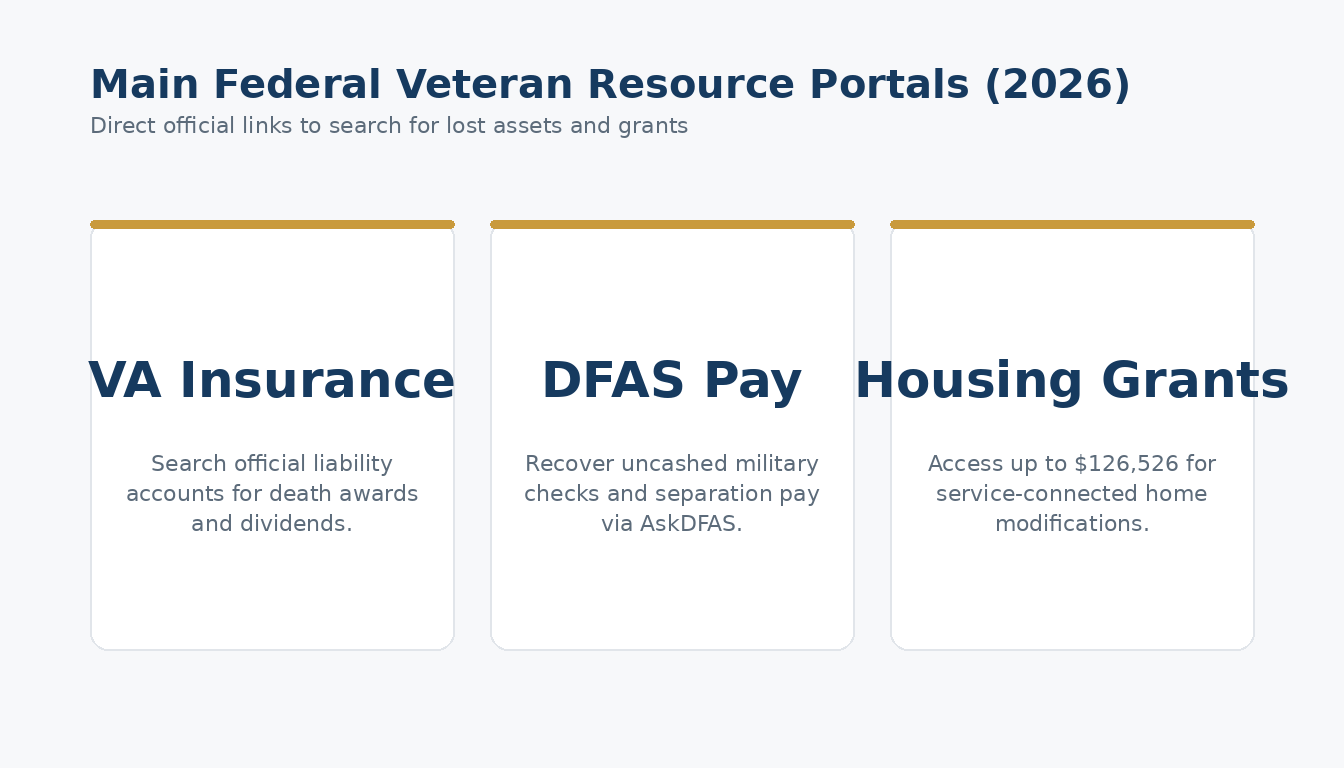
If you or a family member served in the U.S. military, your first step in 2026 should be checking three specific federal databases that are frequently overlooked by general unclaimed property searches. Unlike state-run portals that handle old bank accounts or utility deposits, these federal registries focus exclusively on funds generated during military service or through VA-administered benefits.
To begin your search for unclaimed VA life insurance, navigate directly to the official VA Life Insurance portal. This database allows you to search by the veteran’s last name and first name. It is important to note that this specific tool does not include Servicemembers’ Group Life Insurance (SGLI) or Veterans’ Group Life Insurance (VGLI) from 1965 to the present; those must be handled directly through the Office of Servicemembers’ Group Life Insurance (OSGLI).
For unclaimed military pay, the process is slightly different. You must visit the Defense Finance and Accounting Service (DFAS) website at dfas.mil and navigate to the ‘Unclaimed Pay’ section. While DFAS does not always provide a public-facing ‘search-by-name’ list for all pay types due to security protocols, you can submit an online ‘AskDFAS’ ticket to request a search of your records for uncashed checks or outstanding travel vouchers.

The Source of VA Unclaimed Insurance Funds
Many veterans wonder how the government ends up holding onto their money in the first place. For the VA, unclaimed funds typically fall into three categories: death awards, dividend checks, and premium refunds. These payments are often returned to the VA by the U.S. Postal Service because the veteran or beneficiary moved without providing a forwarding address.
Dividend checks are particularly common in older policies. If you held a National Service Life Insurance (NSLI) policy (often starting with ‘V’ or ‘N’), you may have been entitled to annual dividends that were never received. Similarly, if a policy matured or was cancelled with an overpayment of premiums, those funds remain in a liability account until the rightful owner is located.
As covered in our guide on unclaimed pensions and life insurance, these federal registries are distinct from the ‘MissingMoney’ database. In 2026, the VA reports that some of these individual awards can exceed several thousand dollars, especially when decades of interest or accumulated dividends are factored in.
Recovering Unclaimed Military Pay and DFAS Records
The Defense Finance and Accounting Service (DFAS) is the agency responsible for paying all DoD military and civilian personnel. When a service member separates from the military, a final audit of their pay account is conducted. If the member moved immediately after discharge, the final paycheck or a travel voucher reimbursement for their move home might have been mailed to an old base address or a defunct forwarding address.
In 2026, DFAS has modernized its ‘Total Force Pay’ business line, but legacy records for members who served in the 1990s or early 2000s still frequently contain ‘undeliverable’ pay. Common asset types include back pay from retroactive promotions, uncashed separation pay, and even tax refunds from the military’s specific payroll tax system.
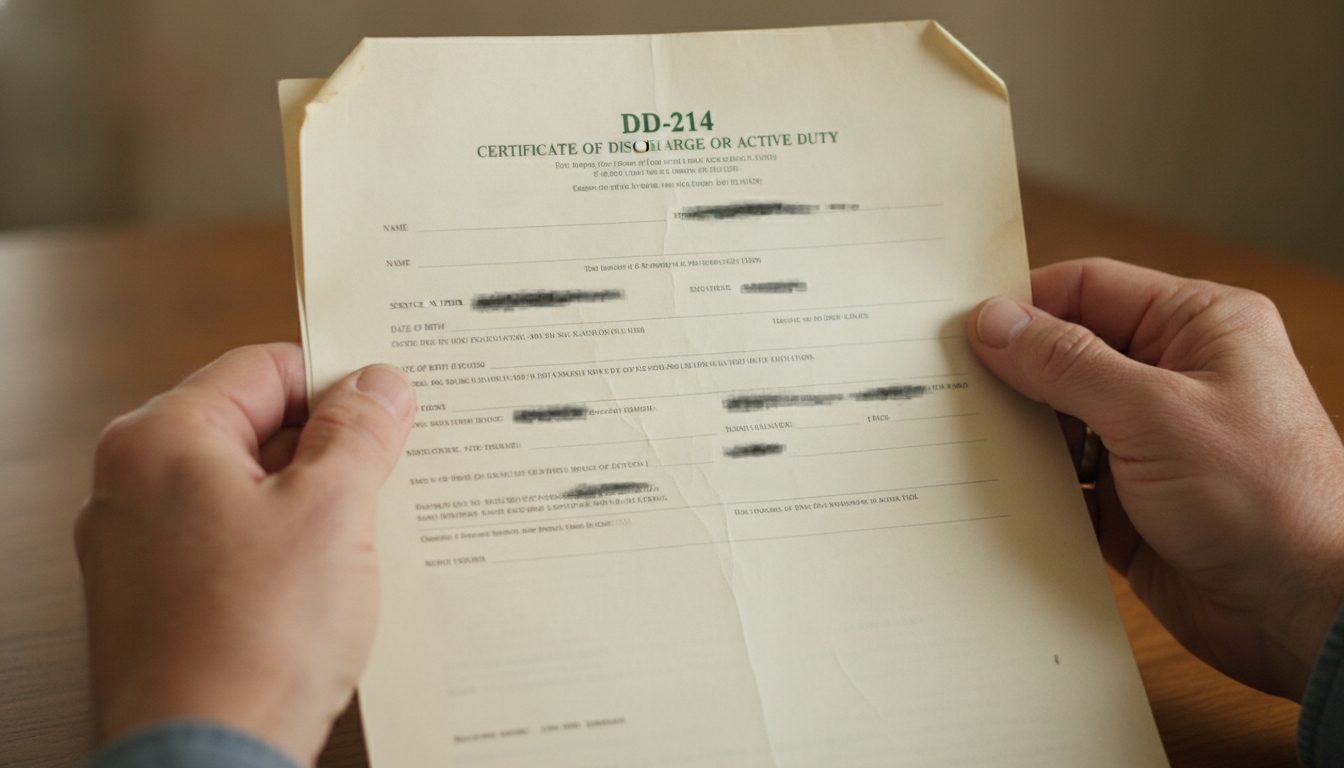
To claim these funds, you will generally need your Social Security number and proof of service, such as a DD Form 214. If you are a survivor searching for a deceased veteran’s pay, you will also need a death certificate and documentation proving you are the legal heir or designated beneficiary. This process is similar to searching for general unclaimed money, but requires more specific military-grade documentation.
Underutilized Federal Entitlements: The 2026 VA Housing Grants
While not ‘unclaimed money’ in the sense of a lost check, billions of dollars in federal grant money for veterans go unused every year simply because eligible individuals do not apply. In 2026, the VA has significantly increased the funding limits for adapted housing grants to keep up with rising construction and renovation costs.
The Specially Adapted Housing (SAH) grant is the largest of these, offering up to $126,526 in the 2026 fiscal year for veterans with certain permanent and total service-connected disabilities. This grant can be used to build an adapted home or modify an existing one. For those with less severe but still mobility-limiting conditions, the Special Home Adaptation (SHA) grant provides up to $25,350.
Additionally, the Home Improvements and Structural Alterations (HISA) grant offers a lifetime benefit of up to $6,800 for service-connected veterans to make smaller changes, such as installing a walk-in tub or a ramp. Unlike the SAH and SHA, the HISA grant can sometimes be used by veterans with non-service-connected disabilities if they meet specific rating thresholds, making it one of the most accessible forms of veteran financial assistance in 2026.
| Benefit Type | 2026 Max Amount | Primary Purpose | Official Source |
|---|---|---|---|
| VA Life Insurance | Varies (Award-based) | Death awards, dividends, refunds | VA Life Insurance portal |
| DFAS Unclaimed Pay | Varies (Account-based) | Back pay, travel, separation pay | dfas.mil |
| SAH Housing Grant | $126,526 | Major home modifications/builds | va.gov/housing-assistance |
| HISA Grant | $6,800 | Accessibility improvements (ramps, tubs) | VA Medical Center (PSAS) |
Essential Documentation for Veteran Claims
Whether you are filing for a $500 uncashed dividend check or a $126,000 housing grant, the Department of Veterans Affairs requires a high standard of proof. The ‘golden ticket’ for any veteran-related claim in 2026 remains the DD Form 214, Certificate of Release or Discharge from Active Duty. This document proves your dates of service, branch, and most importantly, the character of your discharge (Honorable, General, etc.).
If you have lost your original DD-214, you can request a replacement through the National Archives. In 2026, most requests can be handled digitally via the eVetRecs system. In addition to service records, you should prepare a valid government-issued ID and, for housing grants, a medical statement from a VA physician documenting the necessity of the home modifications.
For family members searching for the assets of a deceased veteran, the requirements are more stringent. You must typically provide a certified copy of the death certificate and proof of your relationship. If the veteran died without a will, the VA or DFAS may require an ‘Affidavit of Heirship’ to ensure the funds are distributed according to the laws of the veteran’s state of residence at the time of death.
Protecting Yourself from ‘Pension Poaching’ and Grant Scams
As veteran benefit totals hit record highs in 2026, scammers have become increasingly sophisticated. One common tactic is the ‘pension poacher’ who promises to help you find ‘hidden’ VA money for a percentage of the payout. Under federal law, no individual or organization may charge a veteran a fee to file an initial claim for benefits.
Another red flag is any website that asks for your social security number or banking information before providing a search result. Official government portals like insurance.va.gov or dfas.mil will never ask for a credit card number or a ‘processing fee’ to release your funds. If you receive a phone call or text message claiming you have ‘unclaimed veteran bonus money’ waiting for you, do not click the link—instead, go directly to the official VA website to check your status.
Finally, be wary of social media ads for ‘free government grants’ for veterans. While real programs like SAH and HISA exist, they are never awarded through a simple ‘click and claim’ Facebook ad. They always require a formal application through the Veterans Benefits Administration (VBA) or your local VA Medical Center. If you are unsure, contact a VA-accredited Veterans Service Officer (VSO) who can provide free assistance in navigating these programs.

Claiming Veteran Assets as an Heir or Beneficiary
A significant portion of the unclaimed money held by the VA actually belongs to the survivors of veterans. When a policyholder dies, the insurance company (or the VA) may not be notified immediately. If the beneficiary listed on the policy has also moved or passed away, the funds sit in a liability account indefinitely. In 2026, there is no ‘statute of limitations’ on these funds; if the money is yours, you can claim it regardless of how much time has passed.
To search for a relative, use the same VA Life Insurance search tool but enter the deceased veteran’s name. If a match is found, the system will provide a ‘Liability ID’ or a policy number. You will then need to complete VA Form 29-0544 (Selection of Payment Option) to initiate the payout process. If you are the child or spouse of a veteran and believe there may be uncashed checks, it is also worth checking the state-level unclaimed property office for the state where the veteran last lived.
Beneficiaries should also check for ‘Accrued Benefits.’ This is money that was due to the veteran at the time of their death but had not yet been paid—for example, a final disability compensation payment. These claims must typically be filed within one year of the veteran’s death, making this one of the few veteran-related ‘unclaimed’ funds with a strict time limit.
Frequently Asked Questions
Does the VA Life Insurance search include SGLI?
No, the official VA Unclaimed Funds search does not include Servicemembers’ Group Life Insurance (SGLI) or Veterans’ Group Life Insurance (VGLI) records from 1965 to the present. For those, you must contact the Prudential Insurance Company of America, which administers the OSGLI program on behalf of the VA.
How long does it take to receive a payout from the VA?
For straightforward insurance claims with all documentation provided, the VA typically processes payments within 30 to 60 days. However, more complex cases involving multiple heirs or missing service records can take significantly longer as the VA must verify the legal right to the funds.
Can I get a grant for home repairs if my disability isn’t service-connected?
Yes, the HISA (Home Improvements and Structural Alterations) grant is available to veterans with non-service-connected disabilities, though the maximum 2026 award is lower (typically $2,000) than the $6,800 offered to those with service-connected conditions.
Is there a fee to search for unclaimed military pay?
No. Searching for unclaimed military pay through DFAS or state unclaimed property offices is entirely free. Any website or service asking for a fee to ‘unlock’ your records is likely a scam.