
Last updated: August 2026
Figures and program details can change – always verify current details on the official source before acting.
Quick answer
In 2026, the federal government has streamlined access to over $1 billion in disaster grants through the modernized FEMA Individual Assistance program. Many homeowners have “unclaimed” funds because they were previously discouraged by the ‘SBA loan-first’ rule, which has now been abolished. Eligible survivors can now receive an immediate $750 Serious Needs Assistance grant and upfront Displacement Assistance cash without the old bureaucratic hurdles.
Key takeaways
- The ‘SBA Loan Requirement’ is gone, meaning you no longer have to be rejected for a loan to get a grant.
- Serious Needs Assistance ($750) is now a standard, upfront grant for essentials like food and water.
- Displacement Assistance provides flexible, upfront cash for those who cannot return to their homes immediately.
- Appeals are the most common source of ‘unclaimed’ money; 60% of initial denials are overturned with proper documentation.
The 2026 Shift: Why Millions in Disaster Grants Go Unclaimed
For decades, the path to federal disaster assistance was blocked by what many survivors called the “SBA Trap.” Under the old rules, homeowners were often required to apply for a Small Business Administration (SBA) loan and be rejected before they could even be considered for certain FEMA grants. This confusing, circular logic led thousands of families to simply give up, leaving hundreds of millions of dollars in potential aid sitting in federal accounts.
As of August 2026, those barriers have been dismantled. The modernization of the Individual Assistance program has transformed disaster recovery from a loan-heavy system into a grant-first model. Despite this, a massive “knowledge gap” remains. Many survivors from recent declared disasters still believe the old rules apply, or they haven’t checked back to see if they qualify for the new, simplified categories of assistance like Serious Needs or Displacement grants.
This guide serves as an audit for your disaster recovery. Whether you are dealing with the aftermath of a recent storm or auditing an open disaster declaration from the past year, understanding these new pathways is the only way to ensure you aren’t leaving your share of federal aid on the table. Unlike a loan, these grants do not have to be repaid, provided they are used for their intended purpose.
Myth vs. Reality: Debunking the Barriers to Federal Aid
One of the primary reasons disaster money goes unclaimed is the persistence of outdated myths. To recover what you are owed, you must first separate the 2026 reality from the 20th-century bureaucracy that used to define FEMA.
Myth: “I have to apply for an SBA loan before I can get a FEMA repair grant.”
Reality: This is the single biggest change in the 2026 recovery landscape. FEMA has officially eliminated the requirement to apply for an SBA loan before being considered for Other Needs Assistance (ONA). You can now receive grants for personal property, tools for school, and other essentials simultaneously with your main application.
Myth: “FEMA grants are only for people without insurance.”
Reality: While FEMA cannot duplicate benefits your insurance already paid, they can often bridge the gap. If your insurance settlement falls short of making your home safe, sanitary, and functional, or if your insurance company denies your claim, you may be eligible for federal grants to cover the difference. This is a common source of “unclaimed” money—people who stop searching once their insurance check arrives, even if that check doesn’t cover the full cost of repairs.
Myth: “I make too much money to qualify for a government grant.”
Reality: Disaster grants are not “welfare.” While some specific categories have income considerations, the core grants for home repair, serious needs, and displacement are based on the damage sustained and the lack of insurance coverage, not your annual salary.
The ‘Serious Needs’ Grant: Immediate $750 for Essentials
One of the most significant additions to the 2026 disaster toolkit is the Serious Needs Assistance grant. This is designed to be the fastest money out the door. It is a one-time, fixed payment (currently $750) provided to households to cover life-sustaining essentials like water, food, first aid, prescriptions, and fuel for transportation.
In the past, this was known as Critical Needs Assistance and was only triggered under very specific, limited circumstances. Now, it is a standard part of the Individual Assistance program for any disaster that is declared for Individual Assistance. This money is often “unclaimed” because survivors assume it is part of their larger repair grant and don’t realize they can request it as an immediate, upfront payment to handle the first 48 to 72 hours of a crisis.
To qualify, you simply need to state at the time of registration that you have “serious needs” and that your primary residence is in the declared area. Because this grant is processed quickly, it often arrives in a claimant’s bank account via direct deposit within days of an inspection—or even before the inspection in some high-priority cases.
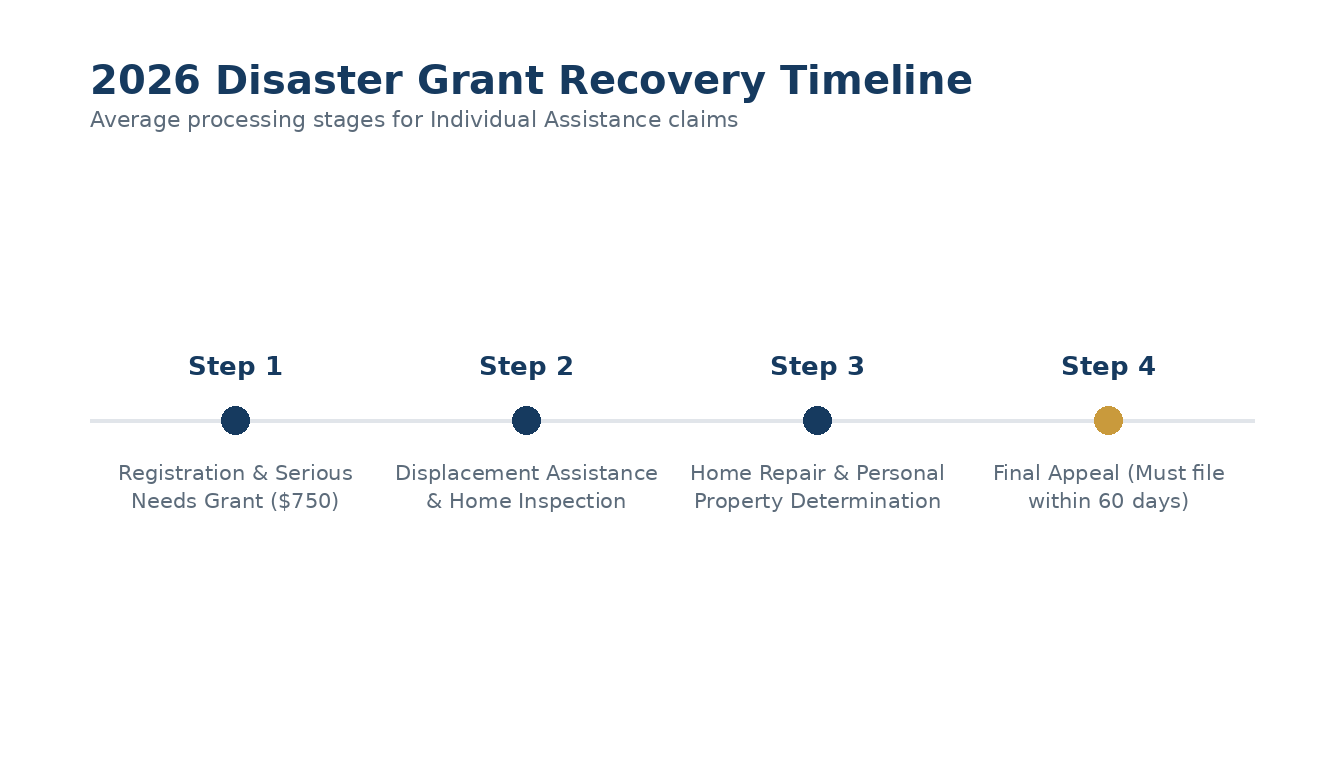
The chart above illustrates the 2026 standardized timeline for grant processing. Note that the “Serious Needs” phase is now the shortest, intended to prevent the financial ‘spiral’ that often happens immediately after a disaster event.
Displacement Assistance: Upfront Cash for Housing Flexibility
Another major source of unclaimed disaster money is the newly expanded Displacement Assistance. This program was created to give survivors immediate flexibility. If you cannot live in your home due to a disaster, FEMA provides upfront money to help with your immediate housing needs.
Unlike the old “Lodging Expense Reimbursement” (LER) model, which required you to pay for a hotel out of pocket and then submit receipts for a slow reimbursement, Displacement Assistance is designed to be proactive. It provides a specific amount of money based on the length of time you are displaced, allowing you to stay with friends, family, or at a hotel without the immediate stress of a mounting credit card bill.
Many survivors miss this because they are focused on the “big” home repair grant. They don’t realize that Displacement Assistance is a separate pool of funds that can be accessed early in the process. If you are staying on a neighbor’s couch or in a van, you are still “displaced” and may be eligible for this cash to help cover the costs of your temporary situation.

Quoted Authority: FEMA on the 2026 Reforms
The shift in how these funds are distributed is not just a policy tweak; it is a fundamental rewrite of the federal disaster contract. As noted in official agency guidance, these changes were specifically designed to reach those who previously fell through the cracks.
According to official documentation from FEMA.gov, the goal of the 2026 framework is to “reduce the burden on survivors so they can focus on their recovery.” FEMA Administrator Deanne Criswell previously stated that the agency is moving toward a system that is “people-first,” specifically noting that eliminating the SBA loan requirement was essential to “ensure survivors get the help they need, when they need it, without unnecessary delays.”
This “people-first” approach means that if you were denied aid in a disaster three years ago, the reasons for that denial might no longer exist in a current 2026 declaration. The burden of proof has been simplified, and the categories of aid have been broadened to include things like laptop repairs for students and repair costs for a wider range of accessibility-related items for people with disabilities.
How to Audit Your Disaster Claim: The 2026 Checklist
If you live in a disaster-declared area and haven’t received aid, or if you received less than you expected, follow this audit process to find any unclaimed funds:
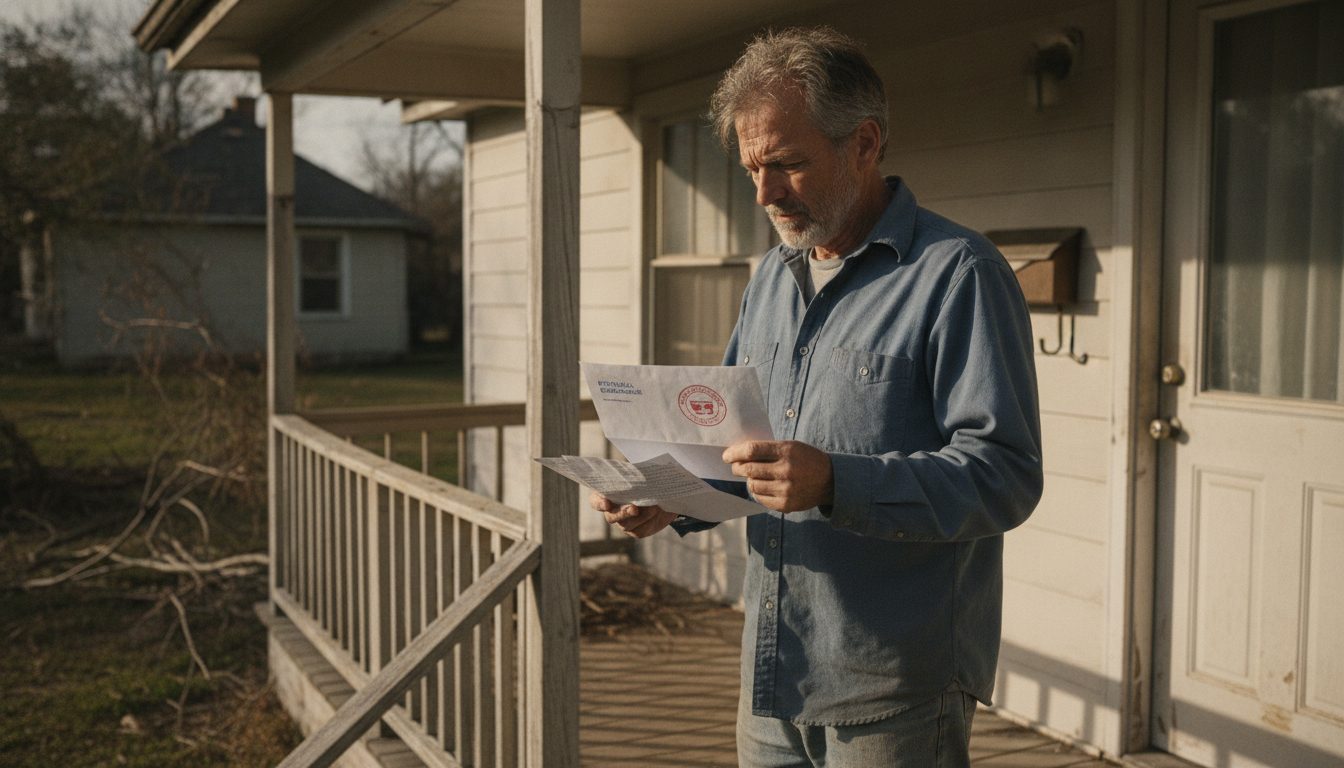
- Check your ‘Notice of Eligibility’: This is the letter FEMA sends after your inspection. Many people see the dollar amount and stop reading. You must read the codes. A code like “No Ins. Settlement” might mean they are waiting for a document you haven’t sent yet—holding up thousands in unclaimed repair money.
- Re-Verify ‘Serious Needs’: If you applied but didn’t receive the $750 payment, call the FEMA helpline at 800-621-3362. Ask specifically if you were evaluated for Serious Needs Assistance and Displacement Assistance.
- Audit for Home Repair vs. Replacement: If your home is unlivable, ensure you were evaluated for ‘Home Repair Assistance.’ This grant can go up to the federal limit (currently over $42,000 for 2026) for items not covered by insurance.
- Review the ‘Other Needs’ Category: This includes money for a new computer, damaged tools for your trade, and even disaster-related funeral or medical expenses. If you didn’t check these boxes on your initial application, you can still add them.
For those also dealing with long-term home issues in rural areas, it is worth checking the 2026 USDA home repair grant guide, as these programs can sometimes work in tandem with disaster recovery for seniors and low-income residents.
The Appeals Process: Where 60% of ‘Denied’ Money Lives
The most common reason disaster grants go unclaimed is a simple “denial” letter that the survivor takes at face value. In reality, a FEMA denial letter is often just a request for more information. Data from previous years shows that a significant percentage of survivors who appeal a denial eventually receive funding.
Common reasons for an initial “denial” include missing signatures, lack of proof of occupancy (like a utility bill), or an incomplete insurance settlement letter. In the 2026 system, the appeal process has been simplified. You no longer need a formal, notarized letter in many cases; a signed statement explaining your situation, accompanied by the missing document, is often enough to reopen the claim.
You have 60 days from the date on your determination letter to file an appeal. This is a hard deadline. If you miss it, the money is effectively gone. Treating every denial as a “work in progress” rather than a final answer is the key to successfully claiming federal disaster grants.

| Grant Type | 2026 ‘Unclaimed’ Risk Factor | Recovery Action |
|---|---|---|
| Serious Needs | Assumed to be part of the ‘big’ check. | Request immediate $750 payment via app. |
| Displacement | Survivor stays with friends, thinks they don’t qualify. | Claim upfront cash for temporary housing. | Insurance ‘Gap’—settlement is too low. | Submit insurance denial or settlement letter. |
| SBA-linked Aid | Survivor refused to apply for the loan. | No longer required! Re-apply for ONA. |
Red Flags: Spotting Disaster Grant Scams in 2026
Whenever federal grant money is in the news, scammers follow. In 2026, we are seeing a rise in “FEMA Document Preparation” services that charge a fee to file your claim. This is a massive red flag. Applying for federal disaster assistance is 100% free.
Another common scam involves “official” looking inspectors who demand a fee to speed up your inspection. A real FEMA inspector will never ask for money, and they will always have a government-issued photo ID badge. They will also already have your registration number; you should never have to provide your Social Security number to an inspector in the field, as you already provided it during the secure registration process on DisasterAssistance.gov.
If someone contacts you claiming they can get you a “guaranteed” $10,000 grant for a fee, it is a scam. Federal grants are determined by a standardized inspection and verification process, not by who you know or what fee you pay.
What is the ‘SBA Loan Requirement’ and is it actually gone?
Yes, as of 2024 and continuing through 2026, FEMA has removed the requirement that survivors apply for a Small Business Administration (SBA) loan before being eligible for ‘Other Needs Assistance’ (ONA) grants. You can now receive grants for items like appliances, clothing, and school supplies regardless of your SBA loan status.
How do I find out if there is a disaster declaration for my area?
You can search your address directly on the official portal at DisasterAssistance.gov. This site will tell you if your county is included in a federal declaration and what specific types of aid (Individual Assistance vs. Public Assistance) are currently available.
Can I get a FEMA grant if I already started repairs?
Yes, but you must be able to document the damage and the costs. It is vital to take photos of all damage before you clean up or repair, and keep every single receipt. FEMA may reimburse you for ‘safe, sanitary, and functional’ repairs made before your inspection, provided they meet program guidelines.
What happens if my insurance payout is delayed?
If your insurance is delayed (usually more than 30 days), you can request an advance from FEMA. However, this is technically a loan-style advance; you will be required to pay FEMA back once your insurance settlement finally arrives. This ensures you have cash on hand for immediate repairs without duplicating benefits.