

Last updated: August 2026
Figures and program details can change – always verify current details on the official source before acting.
Quick answer
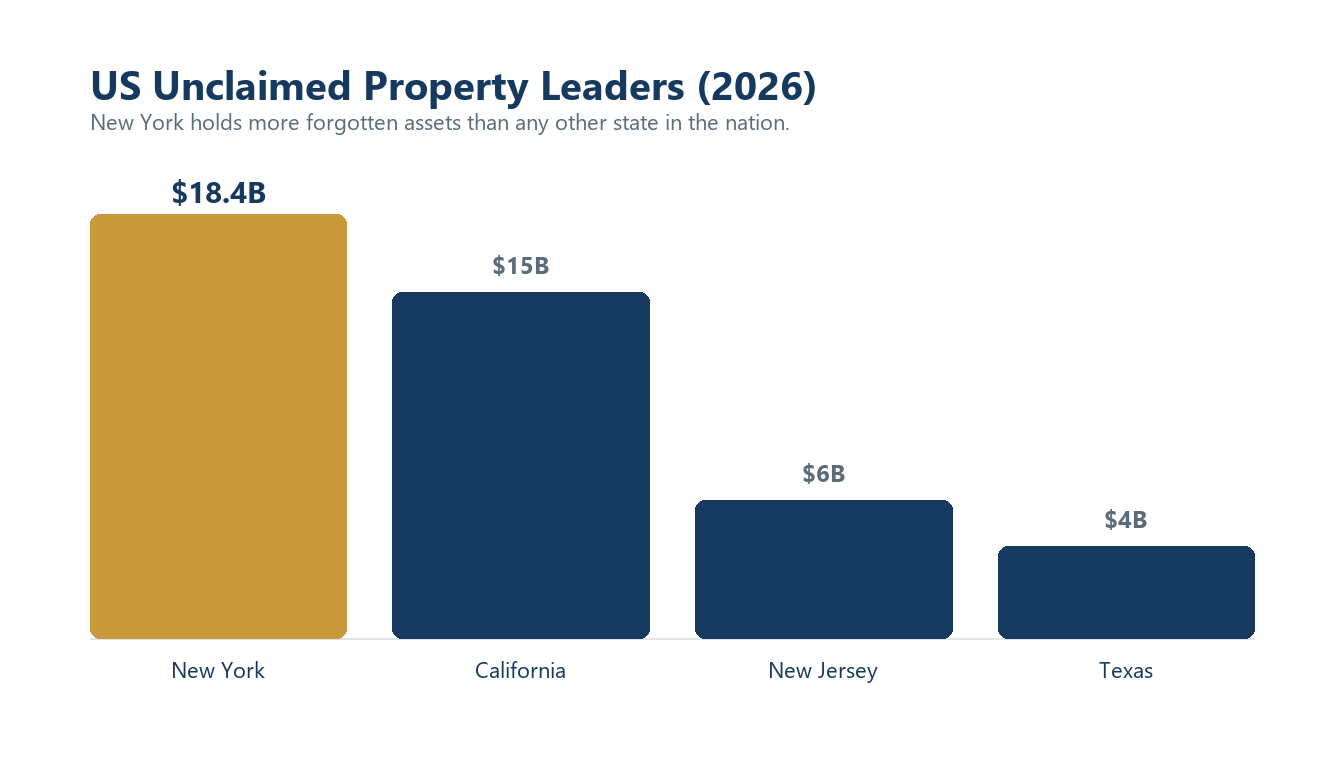
New York currently holds the largest unclaimed property fund in the United States, totaling over $18.4 billion across 46 million accounts. You can search for your share for free through the Office of the State Comptroller (OSC) website at osc.ny.gov/unclaimed-funds. Claims are processed at no cost, and there is no time limit to recover your money.
Key takeaways
- New York’s $18.4 billion fund is the highest in the nation, with roughly 1 in 4 New Yorkers having money waiting.
- A 2026 program expansion has increased the number of “automatic” checks mailed to residents for amounts under $1,000.
- The New York City region accounts for over 55% of all unclaimed assets, primarily from forgotten rent deposits and utility refunds.
- Documentation requirements in New York are strictly tiered based on the value of the claim to prevent fraud.
As of August 2026, the New York State Comptroller’s Office is managing a record-breaking $18.4 billion in unclaimed funds. This isn’t just “forgotten” money; it is a massive pool of capital that represents the largest state-held consumer asset cache in the world. From the skyscrapers of Manhattan to the dairy farms of the North Country, the sheer scale of this fund means that nearly every household in the Empire State has a statistical likelihood of a connection to a lost account.
While many states struggle to return even a fraction of their holdings, New York has launched a significant transparency initiative this summer. The Office of the State Comptroller (OSC) recently released its 2026 Interactive ZIP Code Map, revealing that some neighborhoods in Brooklyn and Queens currently harbor more than $100 million in localized unclaimed property. This data-driven approach is designed to nudge the 46 million account holders toward the official search portal.
The NYC Regional Surge: Why Downstate Claims Dominate
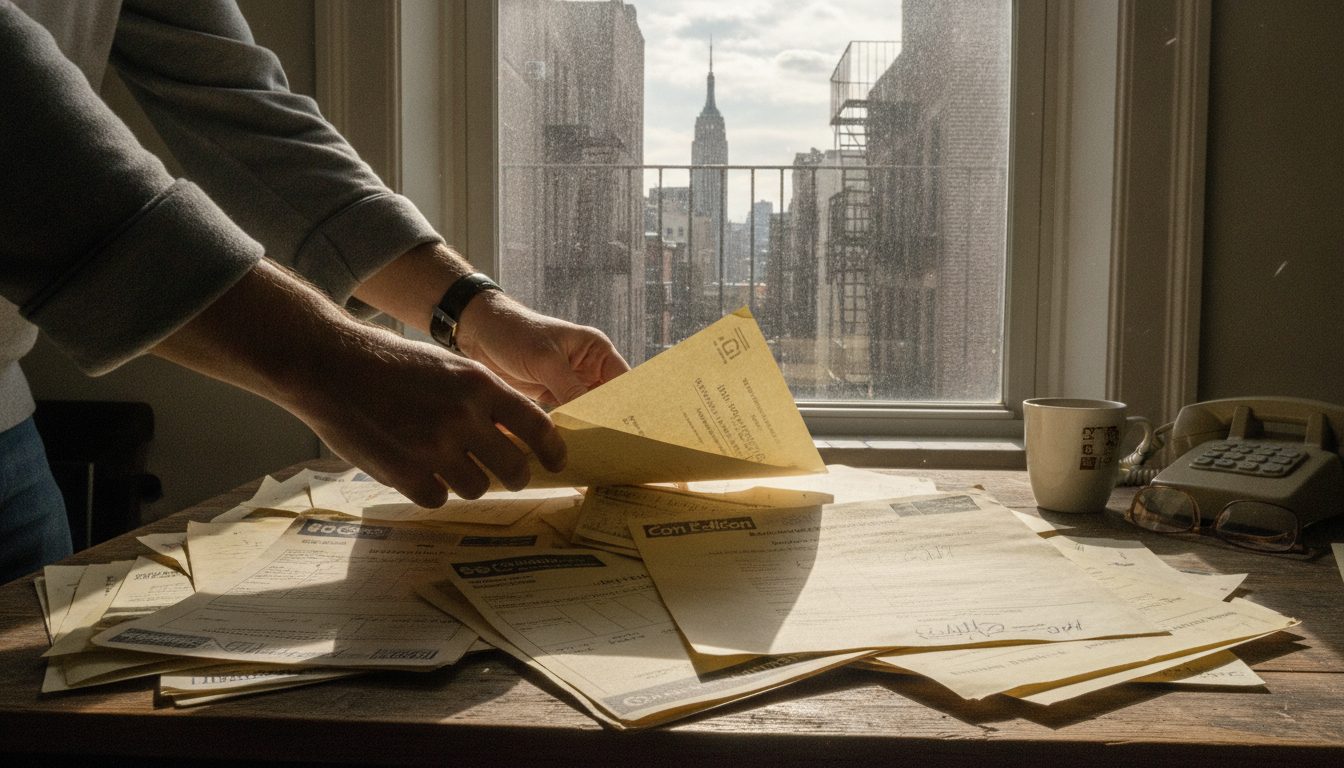
The geographic distribution of New York’s unclaimed property is heavily weighted toward New York City and its immediate suburbs. Because the city has a high rate of residential mobility—people moving between apartments every few years—security deposits and utility overpayments frequently go unclaimed. When a tenant moves and fails to provide a forwarding address, the utility company or landlord is legally required to turn those funds over to the state after a set dormancy period.
For New Yorkers living in high-density areas, the challenge isn’t just finding the money; it’s distinguishing yourself from others with the same name. In a city of millions, a search for “John Smith” or “Maria Rodriguez” can return thousands of results. This is why the New York OSC portal requires specific address history. The system relies on the “last known address” reported by the corporation that held the funds, making your previous ZIP codes the most valuable tool in your search arsenal.
The 2026 ZIP Code Data: Where the Money is Hidden
The most recent data release from the State Comptroller highlights a surprising trend: the growth of unclaimed assets in Long Island and Westchester. While NYC has the highest volume, the suburban counties have seen a 12% increase in the value of abandoned investment accounts and matured insurance policies over the last 18 months. This shift is likely due to the aging population in these regions, where life insurance dividends often go uncollected by heirs who are unaware the policies existed.
If you have lived in Nassau or Suffolk County in the last decade, your search should focus not just on cash, but on “demutualization” proceeds. These occur when an insurance company shifts its corporate structure, leaving policyholders with stock or cash that they never realized they owned. Unlike IRS unclaimed tax refunds, which have a strict three-year window, New York holds these insurance-related funds in perpetuity until a rightful owner comes forward.
The “Check for Cash” Expansion: New York’s Automatic Payout System
In an effort to reduce the massive backlog of 46 million accounts, New York has expanded its “Check for Cash” program in 2026. This initiative allows the Comptroller to skip the manual claim process for certain individuals. By cross-referencing unclaimed property records with current tax filings and Department of Motor Vehicles data, the state can verify an owner’s current address and mail a check automatically.
However, this automatic system is generally reserved for “simple” claims—usually single-owner accounts valued under $1,000 where the address match is 100% certain. If your claim involves a complex asset, like a safe deposit box or a deceased relative’s estate, you will still need to initiate a formal claim through the manual portal. It is a common mistake to wait for an automatic check that may never come because your current address doesn’t perfectly match the state’s historical records.
Navigating the Official Search: A Step-by-Step Walkthrough
To begin your search, you must use the official portal. Do not be misled by third-party sites that look like government agencies. The only official way to recover this money for free is through the Office of the State Comptroller. Follow these steps to ensure you don’t miss any assets hidden under variations of your name:
- Visit the Official Portal: Go to the New York State Comptroller’s Unclaimed Funds page.
- Execute a Multi-Name Search: Search your current legal name, but also search for common misspellings or maiden names. NY’s database is literal; if the company misspelled your name, the state has it recorded exactly that way.
- Filter by City and ZIP: If your name is common, use the filter tools to narrow results to the specific neighborhoods where you have lived or worked.
- Review the “Property Type”: The search results will show you the source of the money (e.g., “Accounts Payable” or “Utility Refund”). This helps you verify if the claim actually belongs to you.
- Add to Cart: New York uses a “cart” system similar to online shopping. You can add multiple properties to a single claim session before checking out.
Once you submit your search, you will receive a claim number. It is vital to save this number immediately, as it is the only way to track your progress through the New York system, which handles tens of thousands of requests weekly.

Tiered Documentation: What New York Requires for Proof
Because New York holds more money than states like Virginia or Georgia, their security protocols are notably more stringent. The documentation you need depends entirely on the “tier” of your claim. For small cash refunds, the system may only require your Social Security Number for online verification. However, for higher-value assets, the burden of proof increases significantly.
If you are claiming property for a business or a deceased family member, New York requires “evidence of a connection.” This might include a copy of an old utility bill from the address listed in the search result, or a death certificate and Surrogate Court documents for an estate. If you cannot provide a document linking you to the specific old address, the OSC may reject the claim, even if the name matches perfectly. This is the most frequent cause of delay in the New York system.
Empire State Comparison: Understanding NY Dormancy Periods
Each state has its own laws regarding how long a bank or business must wait before turning over “lost” money to the government. New York’s Abandoned Property Law (APL) is one of the oldest in the country. Understanding these timelines can help you predict when a recently closed account might finally appear in the state’s database. If you just closed a bank account six months ago, it won’t show up yet—the bank must hold it for several years first.
| Property Type | NY Dormancy Period | Search Frequency Recommendation |
|---|---|---|
| Wages & Salaries | 1 Year | Check Annually |
| Utility Deposits | 2 Years | Check every 24 months |
| Checking/Savings Accounts | 3 Years | Check every 3 years |
| Life Insurance Policies | 3 Years | Check after 3 years |
| Court Funds | 5 Years | Check after 5 years |
As shown in the table, New York has a very short dormancy period for wages. If you left a job and never received your final paycheck, it will move to the state much faster than a forgotten savings account. This is why we recommend that New Yorkers perform a “fresh” search at least once every 12 months, as new batches of data are uploaded from corporations every spring and fall. For more on how these periods differ across the country, see our 2026 dormancy comparison table.
Protecting Your Claim: Avoiding the “Empire State” Scams
With $18.4 billion on the line, New York is a primary target for sophisticated unclaimed property scams. These often take the form of official-looking letters or emails claiming that the state is about to “seize” your money unless you pay a processing fee. In reality, the New York State Comptroller will never charge you a fee to search for or claim your money. The service is always free.
Be particularly wary of “finders” or “locators” who contact you offering to recover your funds for a percentage (often 15% to 30%). While these services are legal in New York if they are registered, they provide no service that you cannot do yourself in ten minutes. Furthermore, a locator is legally prohibited from charging more than 15% in New York, yet many offshore scammers ignore these limits. If anyone asks for your Social Security Number or a credit card over the phone to “unlock” a claim, hang up immediately.

Summary of the New York Recovery Process
Recovering money in New York is a marathon, not a sprint. Because the state is processing billions of dollars for millions of people, even an online claim can take several weeks to move from “Received” to “Paid.” The key is accuracy. Ensure that every digit of your Social Security Number is correct and that you have scanned your identification documents clearly if they are requested.
By leveraging the new 2026 ZIP code tools and understanding the specific dormancy periods for the Empire State, you can take control of assets that belong to you. Whether it’s a $50 utility refund or a $50,000 inheritance, that money is better off in your bank account than in the state’s multi-billion dollar vault. Start your search today, and remember to check back every year as new property is reported.
Looking for another state? See our full state-by-state unclaimed money directory to find your state’s official search portal.
Frequently Asked Questions
How long does it take to get a check from New York State?
For simple claims submitted online with all required documentation, New York typically issues checks within 30 to 60 days. However, complex claims involving estates, trusts, or high-value stock certificates can take 90 days or longer to process due to the manual verification required.
Can I claim money for a deceased relative in New York?
Yes. You must provide a death certificate and proof that you are the legal heir or the executor of the estate. New York is very strict about estate claims; if the value is high, you may need to provide letters of administration from a New York Surrogate’s Court.
Is there a deadline to claim my money in NY?
No. New York State acts as a perpetual custodian of the funds. The money never “escheats” to the state’s permanent ownership in a way that prevents you from claiming it. Whether it was turned over in 1970 or 2026, you can still claim it today.
Why does the search show my name but a different address?
The address shown in the search result is the last address the company had on file for the owner at the time the money was forgotten. If you lived at that address at any point in the past, the money is likely yours. You will simply need to provide proof of that previous residency during the claim process.
Official Sources:
– New York Office of the State Comptroller (OSC)
– National Association of Unclaimed Property Administrators (NAUPA)