

Last updated: August 2026
Figures and program details can change – always verify current details on the official source before acting.
Quick answer
Unclaimed homeowner equity, often called “surplus funds” or “excess proceeds,” occurs when a property is sold at a tax or foreclosure auction for more than the debt owed. In 2026, thanks to landmark Supreme Court rulings, these funds belong to the original owner, but they are rarely found in state unclaimed property databases. To recover your share, you must audit the specific County Treasurer or Clerk of Court where the sale occurred, often within a strict 180-day to 2-year window.
Key takeaways
- Surplus funds are “off-book” assets held at the county level, not the state level.
- The 2023 SCOTUS ruling in Tyler v. Hennepin County made “home equity theft” illegal, forcing states to return surplus cash.
- Claims often require a title search and a formal “Application for Excess Proceeds.”
- Third-party “equity tracers” often charge 40% fees for work you can do for free.
The $100,000 Hidden Check: Why Your Home Equity is Missing
Imagine a family losing their home over a $15,000 delinquent tax bill. The county puts the house up for auction, and a developer buys it for $150,000. In the past, many local governments simply kept the $135,000 difference, a practice known as “home equity theft.” However, as of August 2026, the legal landscape has shifted dramatically. That $135,000 is now legally recognized as the “unclaimed equity” of the original homeowner, yet it remains one of the most difficult types of money to recover.
The primary hurdle is visibility. Most people looking for forgotten cash start and end their search at a state treasury website like MissingMoney.com. While those databases are excellent for uncashed checks or utility deposits, they almost never contain real estate surplus funds until many years have passed—if at all. Surplus funds are held in “local silos,” typically the ledger of a County Treasurer or a Clerk of the Court. If you don’t know the specific county office to audit, the money eventually “escheats” or is permanently forfeited.
As we navigate the 2026 recovery environment, it is vital to understand that these are high-ticket claims. Unlike the average $50 utility refund, surplus fund checks often range from $20,000 to over $200,000. This high value has attracted an entire industry of “equity recovery” companies that may try to take a massive cut of your family’s legacy. This guide provides the blueprint to auditing these local silos yourself and claiming 100% of the equity you are owed.

The 2026 Legal Revolution: How SCOTUS Changed Your Rights
The most significant development in unclaimed property law this decade was the Supreme Court’s unanimous decision in Tyler v. Hennepin County. Chief Justice John Roberts, writing for the court, famously stated, “The taxpayer must render unto Caesar what is Caesar’s, but no more.” This ruling established that while a government can seize a home to collect a debt, it cannot use that debt as a pretext to confiscate the entire value of the property.
In the wake of this ruling, 2025 and 2026 have seen a massive wave of state legislative updates. States like Michigan, Massachusetts, and Nebraska have overhauled their tax sale processes to create formal “Notice of Intent” systems. These laws require the government to notify former owners that a surplus exists and provide a specific window—often very short—to claim it. If you lost a property to a tax deed sale or mortgage foreclosure in the last few years, the law is now more in your favor than ever before.
However, “more in your favor” does not mean “automatic.” Even in 2026, the burden of discovery remains on the claimant. Governments are generally not required to track you down across state lines or hire private investigators to find your new address. They simply hold the funds in a registry and wait for a valid application. If the application doesn’t arrive by the statutory deadline, the window for recovery slams shut, often permanently.
The ‘County Silo’ Problem: Why State Searches Fail
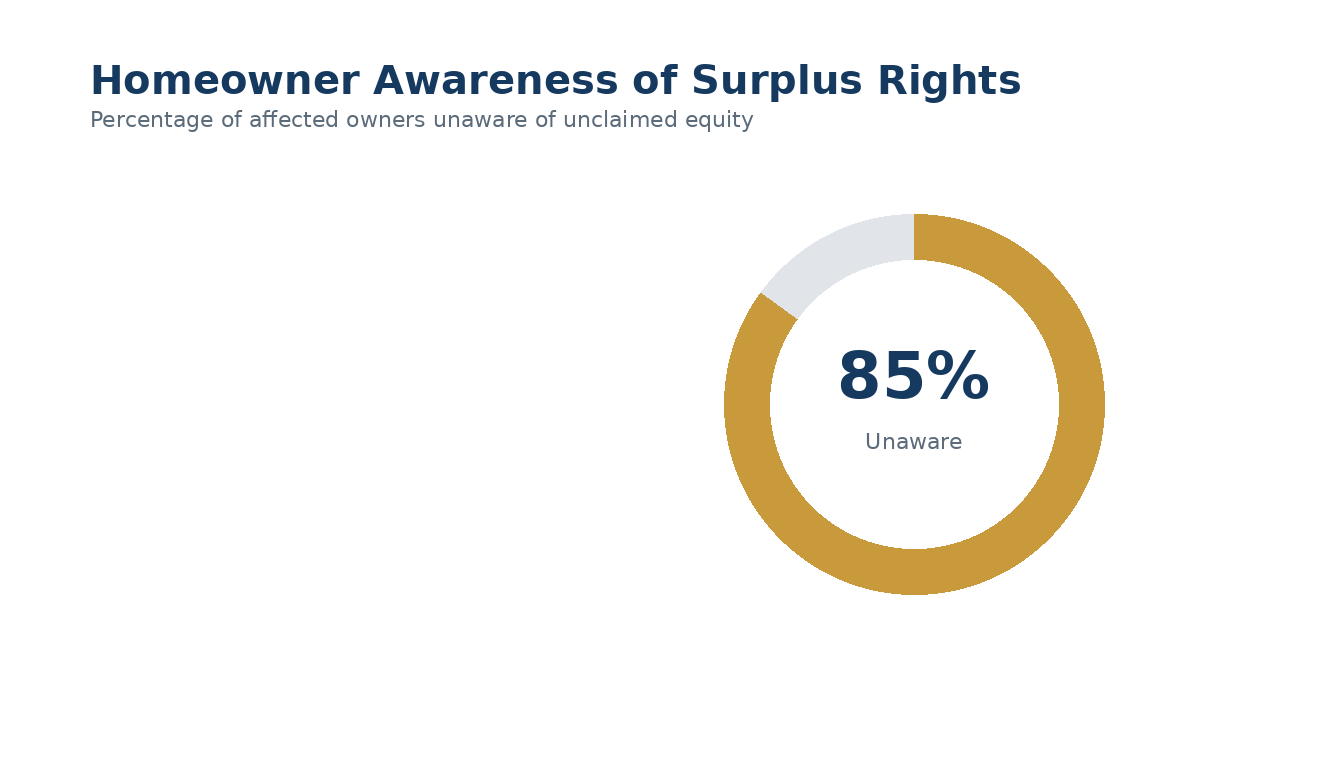
One of the most common mistakes homeowners make is assuming that because their name didn’t appear in a state-wide search, no money exists. In the world of real estate, there is a massive gap between the county ledger and the state database. When a property is sold at auction, the “Excess Proceeds” are deposited into a local account. Depending on the state, those funds may sit at the county level for 1, 3, or even 5 years before they are ever sent to the State Treasurer.
This gap is where most equity is lost. If your state has a 2-year deadline to claim surplus funds at the county level, but the county doesn’t report unclaimed property to the state until year 3, the money will never actually reach the state database. It is “consumed” by the county’s general fund because no one filed a claim during the local window. This is why a manual audit of the county where the property was located is the only definitive way to find these funds.
Furthermore, the naming conventions for these funds vary wildly. You might be searching for “unclaimed money,” while the county has it filed under “Overbid Account,” “Residual Proceeds,” or “Registry of the Court.” This linguistic barrier keeps billions of dollars out of the hands of the rightful owners every year. To find your money, you must use the specific terminology recognized by that local jurisdiction.
| Feature | Tax Deed Surplus | Mortgage Foreclosure Surplus |
|---|---|---|
| Holding Entity | County Treasurer / Tax Collector | Clerk of the Court / Trustee |
| Claim Deadline | Often 180 days to 2 years | Varies by State (1-5 years) |
| Priority of Payee | Original Owner (after liens) | Junior Lienholders then Owner |
| Discovery Tool | County “Excess Proceeds” List | Court Case Docket Search |
How to Audit Your Home Equity: A Step-by-Step Blueprint
Conducting a self-audit for surplus funds requires more legwork than a standard search, but the potential payout justifies the effort. The first step is to identify the exact entity that conducted the sale. If the house was taken for unpaid property taxes, you are looking for the County Treasurer or Tax Collector. If it was a bank foreclosure, you are looking for the Clerk of the Court or a private Substitute Trustee.
Once you have the right office, search their official .gov website for terms like “Excess Proceeds List” or “Unclaimed Surplus.” Many counties now publish an Excel or PDF list of every property that sold for more than the debt owed. If a list isn’t available online, you must contact the office directly and ask for the “Overbid ledger for the [Year] tax sale.” This is a public record, and they are required to provide it, though they may charge a small fee for the printout.
After confirming the funds exist, you must navigate the “Interpleader” or “Application” process. This isn’t just a simple web form. You will likely need to provide a certified copy of the deed, proof of identity, and—crucially—a title report showing that there are no other unsatisfied liens (like second mortgages or IRS tax liens) that have a higher priority claim to the money. This process ensures the government doesn’t pay the wrong person, which would leave them liable for the error.

The Claimant’s Journey: A $120,000 Recovery Story
Consider the scenario of Sarah, who inherited her father’s home in a different state. Unbeknownst to her, the property had $8,000 in back taxes. The county sold the home for $140,000. Sarah assumed the house was simply “lost” and that the debt had consumed the value. Two years later, she learned about surplus funds and contacted the County Treasurer. Because she acted before the state’s three-year deadline, she was able to recover $132,000 that had been sitting in a county account. This vignette highlights the most important rule of 2026: never assume the debt equals the value. Most properties, even in distress, have significant equity remaining.
Sarah’s case also illustrates the importance of documentation for heirs. Because the property was in her father’s name, she had to provide a death certificate and probate documents proving she was the legal successor. As we covered in our heir’s guide to inherited assets, claiming money for a deceased relative adds a layer of complexity but does not change your underlying right to the equity. In many states, a “Small Estate Affidavit” can be used to bypass full probate if the surplus is the only major asset remaining.
The key takeaway from Sarah’s journey is that the government did not reach out to her. The “Notice of Sale” was sent to the vacant house, and the “Notice of Surplus” sat in a file folder at the courthouse. It was Sarah’s proactive search—a “surplus fund audit”—that triggered the payout. In the world of government grants and unclaimed money, the person who asks first is the person who gets paid.
Protecting Yourself: Avoiding the ‘Equity Tracer’ Scams
Because surplus funds are high-value, they are a primary target for “professional finders” or “equity tracers.” These individuals monitor county auction results and then track down the former owners, often using high-pressure tactics. A common approach is to send a letter stating, “You have $50,000 waiting for you, but you only have 48 hours to sign this contract or it’s gone forever.” They then ask for a 30% to 50% contingency fee just for telling you where the money is.
While finders are legal in most states, they are often unnecessary. In 2026, many states have capped the fees these tracers can charge—often at 10% or 20%—but these caps are frequently ignored or bypassed through “assignment of interest” schemes where you accidentally sell them your entire claim for a fraction of its value. Before signing anything, check with the local County Treasurer to see if you can file the claim yourself for free. As we discuss in our guide on spotting grant and money scams, any sense of manufactured urgency is a massive red flag.
True official sources will never ask you to pay an upfront fee to receive your own money. They may require a notary fee or a small filing fee, but they will never ask for a percentage of the payout. If a company claims they have “proprietary access” to a database of surplus funds, they are likely just looking at the same public Excel sheet you can find on the county’s official .gov website.
Insider Tip
If the county claims they have already sent the money to the state, ask for the “Escheatment Receipt Number” or the “Date of Remittance.” Armed with this specific date and number, you can bypass the general search on the state website and speak directly to a state claims auditor who can locate the “unindexed” file manually.
Common Mistakes in Surplus Fund Recovery
- The “State-Only” Search: Relying exclusively on state-wide databases like MissingMoney.com and ignoring the county treasurer.
- Missing the Notice of Intent: In states like Michigan, you must file a “Notice of Intent” to claim surplus funds by July 1st of the year following the sale, or you forfeit the right to the money entirely.
- Incorrect Priority Proof: Failing to provide a title search that proves all other lienholders have been notified. If you don’t do this, the county will hold the money indefinitely to protect themselves from lawsuits.
- Ignoring Bankruptcy Rules: If you were in bankruptcy when the house was sold, the surplus funds might belong to the bankruptcy estate rather than you. You must coordinate with your trustee.
Avoiding these mistakes requires a meticulous approach to the paperwork. Many claimants treat this like a simple refund, but it is actually more like a legal proceeding. Treat every document you submit as if it were being reviewed by a judge—because in many jurisdictions, it actually is. The “Clerk of the Court” is often a judicial officer who will not release funds without perfect documentation of your legal standing.

2026 Recovery Timelines: What to Expect
Unlike “Fast-Track” state systems that pay out in 10 days, surplus fund recovery is a marathon. Once an auction is finalized, there is often a “Redemption Period” where the sale isn’t even official yet. Only after this period ends—which can be 30 days to 6 months—does the county calculate the final surplus. Then, the application period begins. From the time you file your initial claim to the time you hold a check, it is common for 90 to 180 days to pass.
The reason for this delay is the “Notification Window.” The county must legally notify every person or company that had an interest in the property—mortgage companies, contractors with liens, even the IRS—to give them a chance to claim their share of the debt from the surplus. Only after those third parties fail to respond or are paid off does the remaining balance go to the former owner. Patience is a mandatory part of the process in 2026.
If you find yourself in a situation where the county is unresponsive, you can leverage the 2023 SCOTUS ruling as a point of advocacy. Mentioning Tyler v. Hennepin County in your correspondence shows the county that you understand your constitutional right to the equity. In many cases, this can move your file from the “to-do” pile to the “priority” pile, as local governments are now very wary of lawsuits involving unreturned equity.
Frequently Asked Questions
Can I claim surplus funds if the house was sold 10 years ago?
Usually, no. Most states have a “Statute of Limitations” for surplus funds that ranges from 1 to 5 years. After that, the money is typically moved to the state’s general fund or the county’s “undistributed” account where it can no longer be claimed by the individual. Always check your specific state’s dormancy laws for real estate proceeds.
What if the owner of the property has passed away?
The legal heirs or the executor of the estate can claim the funds. You will need to provide the death certificate and probate court documents (Letters of Administration) proving your right to represent the estate. Many counties have a specific “Heirship Affidavit” for these situations.
Are surplus funds taxable income?
Generally, no, because the money represents your own equity in an asset. However, if the house was an investment property, there may be capital gains implications. You should always consult a tax professional after receiving a large surplus payout.
Do I need a lawyer to file a claim for surplus funds?
In most counties, you do not need a lawyer to file the basic application. However, if there are multiple competing claims (e.g., several lienholders arguing over the same money), having legal counsel can ensure your priority is protected. For simple cases where there are no other liens, most people can handle the process themselves.
Official Sources for Reference:
1. Supreme Court of the United States: Tyler v. Hennepin County Opinion (PDF)
2. Clark County, NV: Official Excess Proceeds Search & Guidelines
3. Commonwealth of Massachusetts: Recovering Surplus Funds After a Tax Foreclosure