
Last updated: August 2026
Figures and program details can change – always verify current details on the official source before acting.
Quick answer
The Michigan Department of Treasury is currently holding over $2.1 billion in unclaimed property across roughly 26 million individual accounts. As of August 2026, residents can search the official free database at michigan.gov/unclaimedproperty to file a claim. Note that properties valued under $50 may not appear in online search results and often require a direct inquiry with the Treasury office at (517) 636-5320.
Key takeaways
- Michigan is currently safeguarding a record $2.1 billion in lost assets, including uncashed paychecks, utility deposits, and insurance benefits.
- A unique “$50 visibility rule” means many smaller assets are hidden from the public online search tool and must be claimed via phone or manual inquiry.
- New 2026 updates have expanded automated online processing, allowing for automated payouts of simple cash claims without physical paperwork.
- Under the Michigan Uniform Unclaimed Property Act, most assets reach the state after 1-3 years of inactivity, but owners (or heirs) can claim them forever.
The $50 Visibility Gap: Understanding Michigan’s Dual Ledger System
As of August 2026, the Michigan Department of Treasury faces a unique challenge: while it holds over $2.1 billion for residents, a significant portion of those assets remains invisible to the casual searcher. Unlike many states that list every penny online, Michigan’s public search portal typically prioritizes properties valued at $50 or more.
This “hidden ledger” means that millions of smaller accounts—such as final utility refunds, small dividend checks, or forgotten store credits—may exist under your name but won’t trigger a result on the standard website search. For many residents, this creates a false sense of security that the state isn’t holding any of their funds.
To address this, the Treasury maintains a dual-track claim system. While larger amounts can be found and claimed through the self-service portal, smaller amounts often require a direct phone call to the Unclaimed Property Division. This distinction is critical for anyone who has lived in Michigan and wants a truly comprehensive audit of their potential assets.
| Feature | Online Search Portal | Direct Treasury Inquiry |
|---|---|---|
| Property Value | Generally $50.00 and above | All values (including under $50) |
| Search Method | Instant name-based search | Phone or written request |
| Verification | Upload ID online | Manual agent verification |
| Timeline | 7–14 days (online match) | 30–90 days (Manual) |
This visibility threshold is a major reason why the state’s total pool continues to grow despite returning over $163 million to residents in the last fiscal year alone. If you have moved frequently or had several small utility accounts, the hidden ledger is likely where your money is sitting.
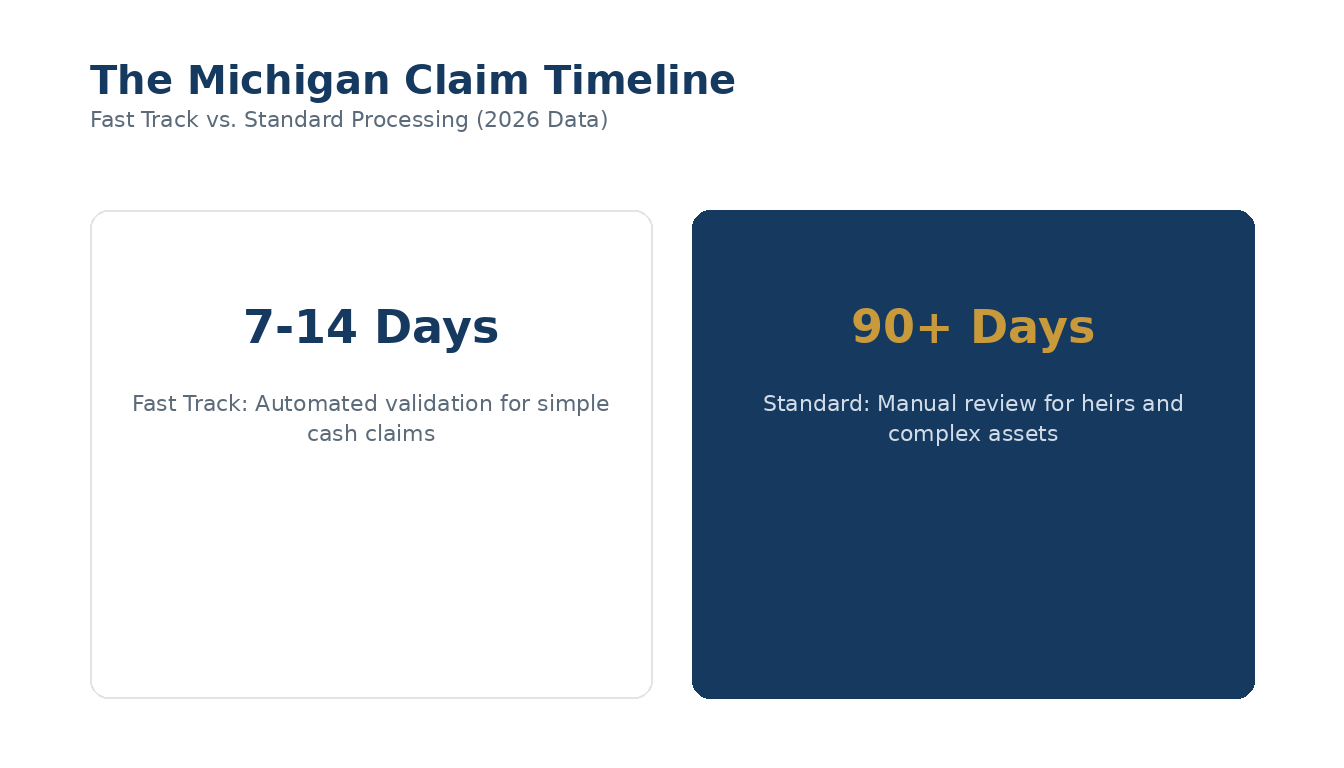
Understanding these two paths is the first step toward a successful recovery. Whether your name appears in the public database or not, the funds are held in perpetuity, meaning there is no deadline to claim what is rightfully yours.
How to Search Michigan’s $2.1 Billion Database in 2026
Finding your money in the Great Lake State is a straightforward process if you know where to look. The only official, free-of-charge source for Michigan residents is the Michigan Department of Treasury Unclaimed Property site.
Start by entering your last name and first name exactly as they would have appeared on past bank accounts or utility bills. If you have a common name, you can narrow your search by adding your city or ZIP code, though keep in mind that the address on file might be an old residence from a decade ago.
Because Michigan’s database is updated multiple times throughout the year, a negative result today does not mean your name won’t appear next month. Many residents find success by checking shortly after the July 1 reporting deadline, which is when most Michigan businesses turn over newly abandoned assets to the state.

If your search yields a match, the system will prompt you to “Claim” the item. At this stage, you will be asked to provide basic contact information and your Social Security number to verify your identity against the state’s records. This process is secure and encrypted, as the Treasury uses these details to ensure the money goes to the correct individual.
For those who prefer a broader search, Michigan also participates in MissingMoney.com, a national database endorsed by the National Association of Unclaimed Property Administrators (NAUPA). This is especially useful if you have lived in multiple states, as covered in our unclaimed money by state guide.
Required Documents for 2026 Claims: Online vs. Manual
In 2026, Michigan has expanded its automated online claim processing to handle a higher volume of claims automatically. If the information you provide online perfectly matches the data provided by the business that turned over the funds (such as your SSN and last known address), you may not need to provide any physical documentation at all.
However, for more complex situations—such as claiming for a deceased relative or dealing with assets from a business that has since closed—a manual review is required. In these cases, the Treasury will email you a claim form and a list of specific evidence needed to prove your ownership.
Commonly requested documents include a copy of your current driver’s license, proof of your Social Security number (such as a W-2 or Social Security card), and evidence that you once lived at the address associated with the property. For heir claims, you will also need to provide a death certificate and probate documents or a will.
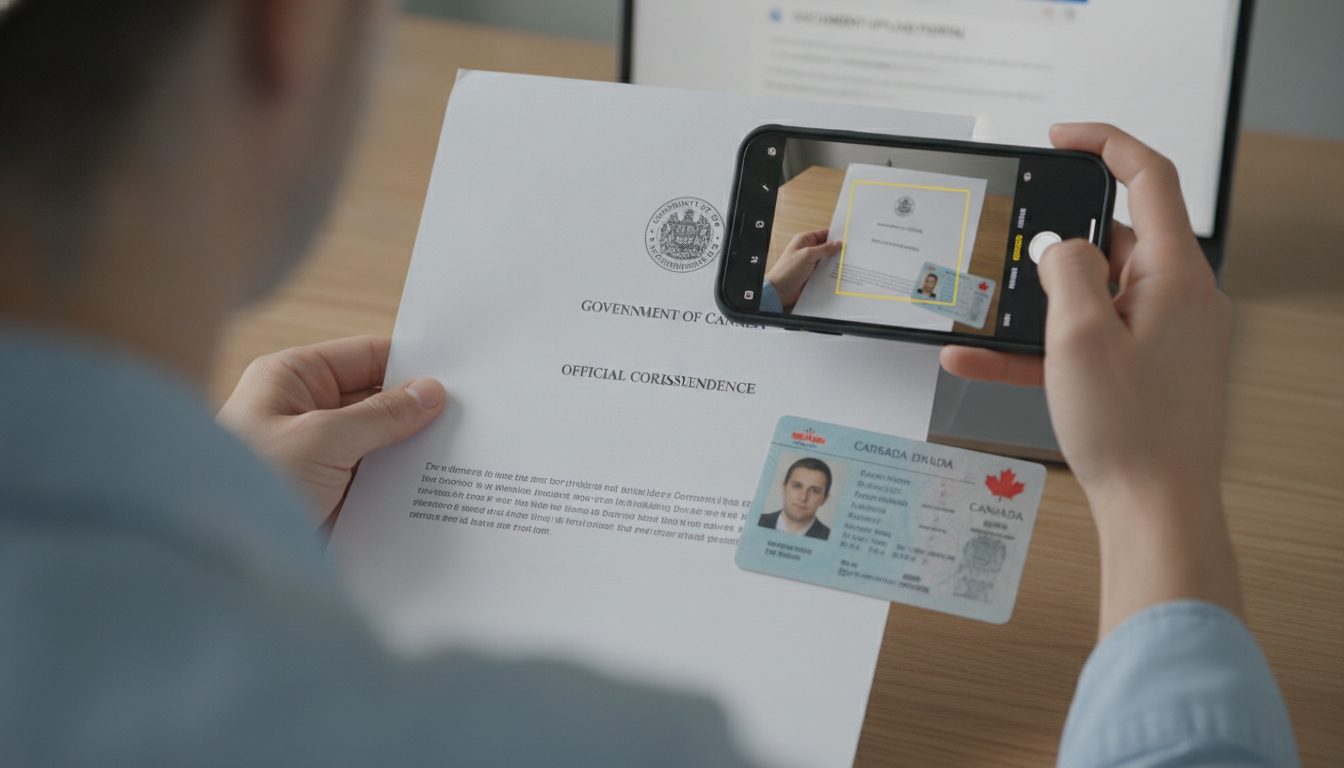
Once you have gathered your documents, you can upload them directly to the Michigan Treasury portal. This is significantly faster than mailing physical copies, which can add weeks to the processing time. Most online-matched claims in 2026 are resolved within 14 days, while manual claims can still take 70 to 90 days to finalize.
The Small Claims Protocol: Finding Assets Under $50
Because of the $50 visibility threshold mentioned earlier, a significant number of Michigan residents will find nothing when they search the website. If you suspect you have small refunds from old DTE Energy, Consumers Energy, or payroll checks from former employers, you must take a more proactive approach.
The most effective way to uncover these “hidden” assets is to call the Michigan Unclaimed Property Division directly at (517) 636-5320. Agents have access to the full internal ledger and can perform a manual search for any amount, regardless of how small. Be prepared to provide your full legal name, any previous names (like a maiden name), and a list of cities where you have lived in Michigan.
Alternatively, you can send a written inquiry to the Department of Treasury at P.O. Box 30756, Lansing, MI 48909. While this takes longer, it provides a permanent record of your request. Many residents are surprised to find that while they don’t have a “big win” waiting, they may have three or four $20 refunds that combine into a useful sum.
This protocol is also useful for properties involving unredeemed gift cards or store credits. Under the Michigan Uniform Unclaimed Property Act, gift certificates generally reach the state after five years of inactivity, and they are frequently listed in amounts just under the $50 threshold.
Recent Legislative Changes and 2026 Protections
In early 2026, Michigan implemented several updates to its unclaimed property laws to better protect vulnerable residents. One of the most significant changes involves active-duty military members. As of 2024 and 2026 updates, the state has extended the “abandonment” period for service members, ensuring their bank accounts aren’t turned over to the state while they are deployed overseas.
Furthermore, the Michigan Supreme Court has recently issued rulings regarding the statute of limitations for state audits. These cases, such as The Walt Disney Company v. Rachael Eubanks, have clarified how far back the state can go when auditing businesses for unreported property. This helps stabilize the fund and ensures that businesses are held accountable for returning assets to Michigan citizens.
Another major 2026 initiative is the proclamation of February 1 as “Unclaimed Property Day” in Michigan. This annual event is designed to raise awareness and encourage residents to check the database at least once a year. Governor Gretchen Whitmer has emphasized that the $2.1 billion fund is not the state’s money—it is the people’s money, and the Treasury’s only goal is to return it.
These legal protections also extend to how the state handles physical property. Items from abandoned safe deposit boxes—ranging from jewelry to rare coins—are eventually sold at auction if no owner is found. However, the cash proceeds from those sales are held by the Treasury indefinitely, meaning you can still claim the value of a family heirloom years after it was sold.
Identifying 2026 Michigan Unclaimed Property Scams
With $2.1 billion on the table, scammers are increasingly active in 2026. A common tactic involves a phone call or text message claiming that the Michigan Department of Treasury has a “large settlement” for you and requires a “processing fee” or your bank login details to release the funds.
It is vital to remember that the Michigan Department of Treasury will never charge you a fee to search for or claim your own money. The service at michigan.gov/unclaimedproperty is entirely free. If a person or website asks for a percentage of the find or an upfront payment, they are likely a third-party “finder” or a scammer.
Real finders, also known as asset recovery specialists, are legal in Michigan, but they are highly regulated. They cannot charge more than 25% of the recovered amount, and they cannot contact you until the property has been held by the state for at least 24 months. However, there is rarely a reason to use these services, as the state’s own tools are designed to be user-friendly for the average person.

Always verify the URL before entering your Social Security number. The official site will always end in .gov. If you receive a suspicious text message, do not click the links. Instead, navigate directly to the official Treasury website or call their verified phone line to check your status safely, as we emphasize in our guide on spotting grant and money scams.
Michigan Unclaimed Property: Common Dormancy Periods
Understanding when your money gets sent to the state can help you prevent it from disappearing in the first place. Michigan’s “dormancy periods” are the amount of time an account must sit idle before a business is legally required to hand the funds over to the Treasury.
For most bank accounts and insurance policies, the period is three years. However, for more “urgent” funds like payroll checks or utility deposits, the period is only one year. If you haven’t cashed a paycheck from a former employer within 12 months, that money is likely already on its way to Lansing.
| Property Type | Dormancy Period | NAUPA Code |
|---|---|---|
| Wages, Salaries, & Payroll | 1 Year | MS01 |
| Utility Deposits & Refunds | 1 Year | UT01 |
| Checking & Savings Accounts | 3 Years | AC01/AC02 |
| Insurance Benefits | 3 Years | IN01 |
| Safe Deposit Box Contents | 3 Years | SD01 |
| Money Orders | 3 Years | CK07 |
| Traveler’s Checks | 15 Years | CK08 |
To prevent your assets from being escheated (turned over to the state), make sure to generate “activity” on your accounts at least once every two years. This can be as simple as a $1 deposit or a logged-in session on your bank’s website. For checks, ensure they are deposited within 90 days of receipt.
Does Michigan really hide money under $50?
Yes. By policy, Michigan’s online search database usually only displays properties valued at $50 or more. To find smaller amounts, you must contact the Michigan Department of Treasury directly by phone or mail to request a manual search of the full ledger.
How long does it take to get an unclaimed property check in Michigan?
For simple claims filed online with matching Social Security information, payouts typically arrive within 7 to 14 days. For complex claims involving heirs, businesses, or physical safe deposit box items, the process usually takes 70 to 90 days, though some cases may take up to six months.
Can I claim money for a deceased relative in Michigan?
Yes. Heirs and legal representatives can file claims for deceased family members. You will need to provide proof of the owner’s death (death certificate) and documentation proving your legal right to the assets, such as probate court orders, a will, or an heirship affidavit.
Is there a deadline to claim unclaimed property in Michigan?
No. There is no statute of limitations on claiming your property in Michigan. The state acts as a permanent custodian of the funds, holding them in trust until the rightful owner or their heirs come forward to claim them, even decades later.