

Last updated: July 2026
Figures and program details can change – always verify current details on the official source before acting.
Quick answer
Illinois currently holds over $6 billion in unclaimed property through its iCash program. Residents can search for forgotten bank accounts, unpaid wages, and insurance benefits for free at the official State Treasurer’s iCash website. Many claims are now automated through the “Money Match” program, which mails checks directly to owners without requiring a formal application.
Key takeaways
- The Illinois State Treasurer is holding approximately $6 billion in forgotten assets for millions of current and former residents.
- The “Money Match” program automatically identifies owners of small amounts (up to $5,000) and mails checks without a claim form.
- Illinois shortened many dormancy periods to three years, meaning money reaches the state’s custody faster than in previous decades.
- Searching and claiming your property through the official iCash portal is always free; avoid any “finder” services charging a fee.
Illinois iCash and Assets: A Quick Look at the Numbers
As of 2026, the Illinois State Treasurer’s unclaimed property fund has grown to record levels. While Texas holds roughly $4 billion, Illinois’ fund has climbed to approximately $6 billion, representing millions of individual accounts ranging from a few dollars to six-figure inheritances.
Most people assume unclaimed property only refers to forgotten bank accounts, but the scope of the iCash database is significantly broader. The state holds everything from uncashed payroll checks and utility deposits to the contents of abandoned safe deposit boxes. Significant portions of the $6 billion fund come from forgotten life insurance policies and matured certificates of deposit. When a person moves or passes away without notifying their financial institutions, these assets eventually migrate to the State Treasurer’s custody. In recent years, the state has also seen an influx of digital assets and stocks. If a brokerage account remains inactive and the firm cannot reach the owner at their last known address, the shares are liquidated and the cash value is transferred to the iCash fund for safekeeping.
The following table outlines the timeline before these various common asset types are considered abandoned and turned over to the state’s custody under the Illinois Revised Uniform Unclaimed Property Act.
| Property Type | Dormancy Period (Illinois) |
|---|---|
| Savings and Checking Accounts | 3 Years |
| Uncashed Payroll/Wages | 1 Year |
| Utility Deposits and Overpayments | 1 Year |
| Life Insurance Benefits | 3 Years |
| Stocks and Dividends | 3 Years |
| Money Orders | 7 Years |
How Unclaimed Assets are Transferred and Tracked
Under the Illinois Revised Uniform Unclaimed Property Act, businesses and financial institutions are required by law to turn over assets that have been inactive for a specific period of time. The Illinois State Treasurer’s Office manages this state-mandated program, known as “iCash,” acting as a temporary custodian. This ensures the money doesn’t stay on the books of a private corporation, but is instead held by the state until the owner is found.
While the majority of the $6 billion iCash fund consists of liquid assets like bank accounts and uncashed checks, the Illinois Treasurer also serves as the custodian for thousands of physical items recovered from abandoned safe deposit boxes. Under the Revised Uniform Unclaimed Property Act, if a safe deposit box is not accessed for five years, the bank is legally required to drill the box and turn the contents over to the State Treasurer. After an additional holding period at the state level—typically another three years—the Treasurer is authorized to liquidate most items through public auctions. This process converts physical heirlooms into a cash value that is then held in the owner’s name in perpetuity, ensuring that the financial benefit is never lost even if the physical item is sold.
These auctions are significant events in Illinois, often held live at the Illinois State Fair or via the official iBid online auction platform. The inventory frequently includes rare numismatic coins, antique jewelry, and valuable collectibles like vintage baseball cards or historical documents. Before any item is listed, the state employs professional appraisers to verify its market value, ensuring the owner’s account is credited with the highest possible proceeds. If you believe a relative may have left a safe deposit box behind, you can specifically search for “tangible property” within the iCash database to identify recovered items before they proceed to the auction block.
However, Illinois maintains a unique and strict “never sell” policy for military medals and decorations found in abandoned boxes. Through the specialized “Operation Purple Heart” initiative, the Treasurer’s Office safeguards hundreds of honors—including Purple Hearts, Bronze Stars, and service ribbons—holding them in a secure vault until they can be reunited with the veterans or their rightful heirs. Because the federal government does not maintain a comprehensive list of all medal recipients, the state proactively publishes a list of these recovered honors on the official Operation Purple Heart portal. This allows families to search specifically for the names of service members to reclaim a vital piece of their military legacy at no cost, reflecting the state’s commitment to honoring veteran sacrifices.
Step-by-Step Guide to Searching and Claiming Your iCash
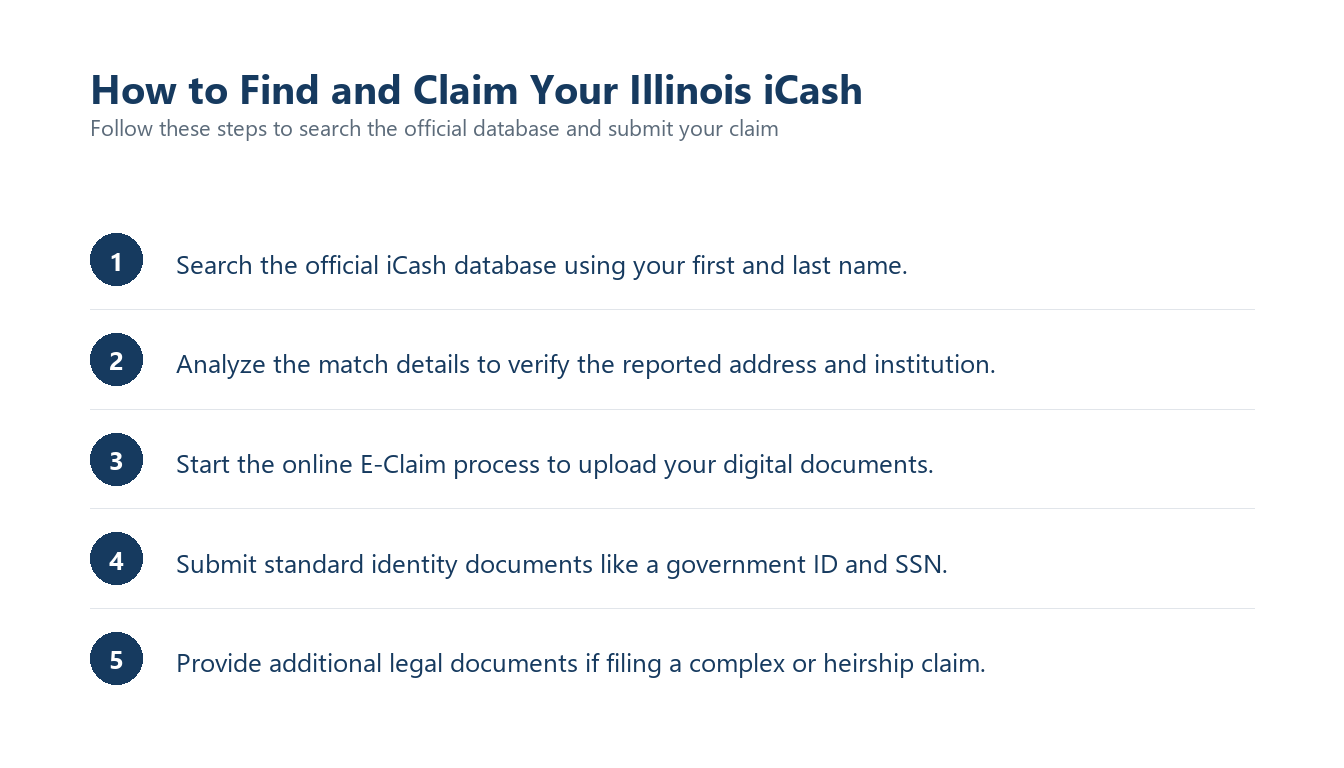
If you have not received an automatic check from the state, your first step is to perform a manual search on the official database. Follow this straightforward step-by-step process to locate your property and file a claim:

- Search the iCash Database: Begin by entering your last name or the name of your business on the official iCash website. For better results, include your first name to filter out common surnames. Because the database holds records dating back decades, you should also search for the names of deceased relatives. Many Illinois residents discover that they are the legal heirs to funds originally owned by parents or grandparents who lived in the state years ago.
- Analyze Match Details: If a match is found, the system will display the name of the owner, the reported address, and the institution that turned over the funds. Note that for security reasons, the exact dollar amount is usually hidden until you begin the official claim process.
- Start the E-Claim Process: Once you locate property that belongs to you, the claim process can often be completed entirely online. The “E-Claim” system allows you to upload digital copies of your identification and proof of address, which significantly speeds up the verification process.
- Submit Standard Identity Documentation: For simple claims involving a single owner, the state typically requires a copy of a government-issued ID and documentation of your Social Security number. If the property was linked to a previous address, you may need to provide an old utility bill or bank statement showing you once lived there.
- Provide Documents for Complex Claims: Complex claims, such as those involving estates or closed businesses, may require additional paperwork. To file an heirship claim for a deceased relative, you will typically need to provide proof of your relationship, a copy of the death certificate, and evidence that you are the rightful beneficiary under a will or state intestacy laws. While these take longer to process, the state provides a dedicated claims representative to help guide you through the more technical legal requirements.

Having your paperwork assembled ahead of time will help ensure that your documentation moves through the state’s digital review process without any delays.
The “Money Match” Program: Automatic Payouts
One of the most innovative features of the Illinois program is the “Money Match” initiative. This system cross-references the unclaimed property database with state tax records and other official databases to verify the identity and current address of property owners.
If the system finds a high-confidence match for an amount under $5,000, it triggers an automated payout. The Treasurer’s office sends a letter to the owner notifying them that a check is on the way, followed shortly by the actual payment.
This “fast-track” approach is similar to the fast-track payouts found in New York, but Illinois has been particularly aggressive in expanding the dollar threshold for these automatic payments. It is estimated that thousands of Illinoisans receive checks every month without ever having to file a manual claim.

Red Flags and Avoiding Unclaimed Property Scams
Because the Illinois unclaimed property list is public information, scammers often use these records to target residents. Understanding the difference between official state communication and a predatory scam is vital for protecting your identity.
- The “Upfront Fee” Trap: The State of Illinois never charges a fee to search for or claim your money. If someone asks for a percentage of the funds or an administrative fee before you receive your check, it is a scam.
- Aggressive Solicitations: While legitimate “asset finders” are legal in Illinois, they are strictly regulated. They cannot charge more than a small percentage (usually 10% for property held over 24 months) and you should never sign a contract without first checking the iCash site yourself for free.
- Verification Requests: Official letters from the Treasurer will direct you to a .gov website or a physical state office. Never provide your Social Security number or bank details over the phone to someone claiming to be with the iCash program.
- Out-of-State Area Codes: Most official communication regarding Illinois unclaimed property will come via standard mail or from a government-verified email address ending in .gov. Be wary of text messages or calls from unknown numbers.
Looking for another state? See our full state-by-state unclaimed money directory to find your state’s official search portal.
Frequently Asked Questions
How long does it take to get a check from Illinois iCash?
Simple electronic claims (E-Claims) are often processed and paid within 4 to 6 weeks. More complex claims involving physical stock certificates, safe deposit boxes, or deceased owners can take 8 to 12 weeks or longer depending on the documentation required.
Does Illinois unclaimed property ever expire?
No. The State of Illinois holds the property in perpetuity, meaning there is no deadline to file a claim. However, once the state liquidates physical items or stocks, you can only claim the cash value of those assets at the time of sale, rather than the items themselves.
Can I claim money for a business that is now closed?
Yes. If you were an officer or owner of a dissolved corporation or partnership, you can claim assets held in the business name. You will need to provide documentation showing your authority to act on behalf of the former business, such as articles of incorporation or dissolution papers.
What happens if I live in a different state now?
You can still claim money from Illinois even if you no longer live there. The property remains with the state where the business that held it was located or where your last known address was on file. You simply follow the standard iCash process from your current location. This matters most for people who moved for a new job, retired to another state, or relocated after a divorce or family estate settlement, since it’s easy to wrongly assume that leaving Illinois means forfeiting a claim.